Doubts about the Facebook founder intensified Thursday as the stock closed below $20 for the first time. The shares, which slipped to $19.87, have shed nearly half their value since Facebook’s disastrous initial public offering three months ago.
Thursday’s selling was driven by the expiration of provisions that had barred Facebook’s venture capital backers from unloading their shares. Trading volume was abnormally heavy, a sign of the fury with which some of the company’s earliest investors ran for the exits as soon as they could.
“This was the most anticipated IPO in many years and it was like an exploding cigar,” said Barry Ritholtz, head of research firm Fusion IQ. “Every investor thought they were about to become wealthy beyond their wildest dreams, and they had this blow up in their face.”
The danger, Ritholtz said, is that the drooping stock price could tag the company itself with a “stink of failure” that could make advertisers less willing to use Facebook.
The ongoing stunt is to mimic a reader who likes the blog but is concerned about the alarming number of spelling errors. Or perhaps it is the paucity of pictures and embedded videos that is holding back the reputation.
Good rock and roll should often be funny and have the ability to offend the easily offended simultaneously. It’s just the hint of a smile in the statesman-like portrait that does it.
“Does humor belong in music?” Frank Zappa once asked. Rhetorical question.
The Los Angeles Times political gossip page: Nov. 3, 2003:
A couple of MP3 online musical parodies by “Arnold and the Gropinators,” a “Venice Beach garage metal” band, have surfaced … the A-side title, “I Think We Should Make a Carla Sandwich,” is taken from a description in The Times of an alleged movie set incident in which Schwarzenegger and his stand-in trapped stand-in [Carla] next to a food service table. Schwarzenegger supposedly said, “I think we should make a Carla sandwich,” and the men squeezed her between them. After they released her, [she] said, Schwarzenegger stuck his tongue in her mouth.
He coulda been a professional skier. He’s a bow-hunting he-man of the back woods. He does a routine of jumping jacks and stretching every morning called P90Btfsplk. He’s really cut. Or he’s the ‘before’ pic in an old comic book ad for a body-building scheme.
Which of these is most likely true? Clue: When DC journalists who resemble pantywaists are writing about the alleged physical might of others …
It’s vaunted advertising algorithms scan your profile and status updates for simple keywords. If you post something like ‘alcohol’ or ‘drink,’ you get beer ads linked to the ‘likes’ of your ‘friends’, then offers for rehab. If you live in southern California, you get anything local. If you talk about playing guitar, you get ads and ‘giveaways’ run by every music store in the country. If you play guitar really well and post evidence on your wall, Facebook will give you links for lessons from Esteban or some local jazz blues and cocktail bar-playing dad. If someone in your ‘friend’ list is from Canada, you will get a pitch to vacation in Alberta.
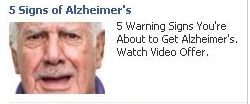
And if you are in your fifties you get blandishments for treating Alzheimer’s before it strikes.
Facebook is different from Apple or Google or Amazon or Microsoft, says Mark Zuckerberg, because it doesn’t build products. It seeks to improve the products built by everyone else …
But Zuckerberg wants more. As the Facebook Platform enters its sixth year, the company is expanding its mission through something it calls the Open Graph. This isn’t a visual graph. It’s not a line graph or a bar graph or a pie graph. In this case, graph is a mathematical term. It’s a way of representing connections between pieces of data …
But Open Graph is more than just way of moving song names from one place to another. It’s at least a small step towards what has long been called the semantic web — a web where information is structured in a way that it be more easily analyzed and refined and reused by outside services. Facebook’s more than 900 million users generate so much data on the social network — and beyond — the company can’t just shuttle all this information into your Newsfeed. Open Graph provides application and website developers with a way of structuring their data, so that Facebook machines can readily use it and restructure it and reuse it as need be.
“We could have just done text analysis,??? says Vernal. “But we decided that if we could create a framework where developers can tell us the structure of this information, we could build much more interesting and much more compelling visualizations of this data both in Newsfeed and on Timeline.???
In short, Facebook is striving to organize and use data generated by other companies in much the same way it has always organized and used data on its own site. Facebook beat out the likes of MySpace because its data was structured in a way that gave it some context …
If you’re in a tech firm you can tell a Wired reporter you piss iced tea and they’ll publish it without blinking.
Then there’s the real world where companies are getting the idea that Facebook’s advertising engine isn’t that great, that like Google Ads, it’s more suited to Internet bottom-feeders and chumming for suckers.
Today, on my Facebook wall:
If you ridiculed Chik-fil-A or ‘liked’ a straight-to-video movie called “Ticked Off Trannies with Knives” as whimsy you will certainly want to go to a bar in WeHo this weekend. And the ‘semantic web’ of your language also tells us that you might wanna run criminal background checks on your ‘friends’ and family.
311 people ‘like’ this. Facebook advertising value: Effin’ priceless.
And if they keep going great guns there’s a “free credit report” in your future, I hear.
Throw your own little share of sand in the gears. Either unlike all the stupid shit that points to businesses, movies, tv, books and bands that your ‘friends’ aren’t really interested in, anyway. Or “like” a lot things you know to be total crap or which you actively hate. Or only “like” stuff that is defunct and/or decades old. All these strategies work, reducing your value while pumping corrupt or un-useful data into the system.
As part of the proposed settlement, Facebook had agreed to give users more control over whether they became unpaid endorsers in ads aimed at their Facebook friends. Facebook also agreed to pay $10 million in legal fees and $10 million to nonprofit organizations specializing in privacy including the Electronic Frontier Foundation.
Facebook has said that Sponsored Stories is one of its most effective forms of advertising on computers and mobile devices. The ads feature the name and photo of a Facebook friend who has clicked that he or she “likes??? the advertiser.
It has begun testing expanding the ad feature to let marketers drop more messages into users’ News Feeds. Those messages would target users on their mobile devices and computers even if they have not “liked??? the advertiser.
So, if for example you follow DD blog advice and ‘like’ Dos Equis beer, even though you think it’s urine, Facebook will want to use your name on a ‘friends’ feed to sell it to them.
For many staffers, the precipitous drop means their Facebook stock is not going to yield the returns they hoped, at least not right away. They have had to defer or downsize their dreams of buying a home or a new car.
“People made life plans and calculations,” said a Silicon Valley chief executive who spoke on the condition of anonymity to preserve his relationships inside Facebook. “This is very, very painful.”
And the noisy public criticism of Facebook has become nearly impossible to shrug off, hurting employee morale.
“These are people who like to win. Now there’s this external measure of winning which is difficult to ignore,” said one former Facebook employee who also requested anonymity to preserve relationships at the company. “It doesn’t feel good.”
All the publish-it-yourself and make-it-on-demand Internet fulfillment houses furnish terrible products which are almost always, by default, overpriced. To keep the prices down you had to select for the cheapest quality materials.
Same goes for book publishing. If you want your book to look respectable, and read respectably (everyone needs a copy editor), the fees at the publish-it-yourself houses begin to stack up. None of them are the deals they are most often made out to be.
There’s another key difference. The editor in charge of your book, and his or her staff, at a traditional publishing house, is likely to actually have an interest in seeing your book is good and does well. The people who do copy-editing and other service packages at publish-on-demand don’t give a shit. Nature of the job.
Not long ago, an aspiring book writer rejected by traditional publishing houses had only one alternative: vanity publishing. For $5,000 or $10,000, or sometimes much more, he could have his manuscript edited and published, provided that he agreed to buy many copies himself, often a few thousand or more. They typically ended up in the garage.
Digital technology has changed all that.
Actually, it would be more precise to say it has changed the terms of the equation, but not the frustration and chance for success, and added the option of having only digital goods.
The article goes on to tell what most know. Traditional book publishers have gone into the business by buying some publish-on-demand sites so they can have a piece of the expanded trash books market as their in-house operation becomes more miserly.
Follow it to a natural conclusion and one can reasonably argue that there is more money to be made in aggregation — publishing all digital or print-on-demand books that sell only a few copies, if any, to friends, than books the in the old fashioned way, except for maintenance of a couple hundred or so print superstars.
But that’s perhaps … too cynical.
However, one of the most important things in selling a book cannot be addressed by publish-on-demand: Publicity.
Without publicity no book stands a chance. And the market of individuals served by publish-on-demand cannot do publicity, or command the respect through reputation of traditional publishing houses.
Consider your list of favorite authors through the years.
Do you really think all of them could have just run out on the Internet, uploaded their books as e-copies to digital stores, e-mailed journalists and celebrities on tv shows to please, please, please read and review them, and still had results that put them where they are in your library?
On-demand and digital publishing has caused an explosion in rubbish, a fact gently acknowledged by the Times, generating a market of place-holder titles, as DD blog described about a month ago, here: Amazon’s numbing list, just for novels on electromagnetic pulse attack on the US.
All these books with titles brainlessly alike, all with virtually identical plots, all very badly written, all published through the same company that acts as a sales platform, Amazon. All worthless. The old slush pile published — and then some.
An eye-watering collection of what can only loosely be called “books” — a digital world’s equivalent of beach sand with Amazon getting a commission on every grain.
It’s vaunted advertising engine, on my page today, rolling out the sales pitches for chump small businesses where the bosses haven’t yet figured out that “likes” from the locals don’t actually mean money. And more popularly, various Internet bottom feeder salesmen:
The spiel from some Dr. Ironbeard begins …
Money line: “Unfortunately, people don’t know they have brain damage until it’s too late …”
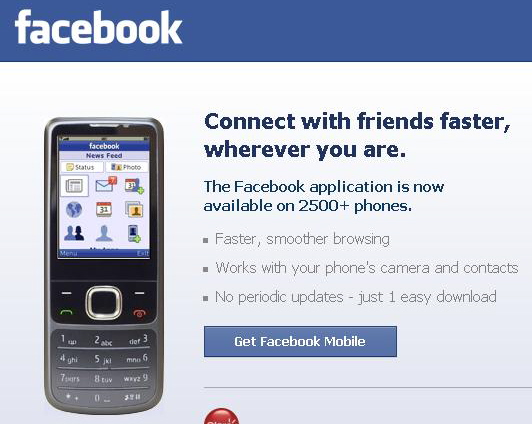
Then this, when you logoff: Facebook adapting its mobile interface for the kind of semi-smart cheapest in the line cellular phones marketed to retirees and the underclasses, those most efficiently targeted by Internet bottom-feeder advertising.
One of the swells at the New York Times tells us what we already know — European countries endure higher taxation than the US, have better standards of living, better health, a bigger social safety net, and aren’t all psychotically resentful over a paranoid belief brown people are coming for their money.
There is something to be said for universal health care systems. (Ain’t that just the best lede, ever?)
When my son developed a rash on an Italian vacation in Liguria (beach resort area for the toffs and their shoeshiners) last month, the pharmacist showed me to the doctor downstairs, who diagnosed the problem at no charge and sent me off with a handshake and a joke about a daughter in med school at the University of California, San Diego …
Every developed country aspires to provide a better life for its people. The United States, among the richest of all, fails in important ways. It has the highest poverty and the highest infant mortality among developed nations. We provide among the least generous unemployment benefits in the industrial world …
Citizens of most industrial countries have demanded more public services as they have become richer. And they have been by and large willing to pay more taxes to finance them … The big exception has been the United States.
No wonder we can’t afford to keep more children alive …
Alberto Alesina, an Italian-born economist at Harvard, contrasts American individualism rooted in the belief that effort brings success with Europeans’ belief in state redistribution — born of Europe’s long history of inherited wealth. Americans who think they have a fair shot at striking it rich vote against high taxes on their expected future wealth. (When can we drive a stake through this one? The inner delusion that progressive taxation of the wealthy is bad because I, too, might someday be part of the club and don’t want to piss the noblemen off.) Europeans who believe wealth is mostly a matter of luck and connections are less resistant to paying taxes for collective welfare.
Ten years ago, the sociologist William Julius Wilson wrote that American whites rebelled against welfare because they saw it as using their hard-earned taxes to give blacks “medical and legal services that many of them could not afford for their own families.???
Of course, only the swell knows this because the rest of us don’t have the telling anecdote about the poxy kid who was treated gratis on the Mediterranean coast, saving the vacation.
We have more in common with Greece than most of us believe. In fact, our situation may be worse than Greece, which is the quintessential definition of modern economic doom …
Few of our politicians are willing to even discuss the drastic cuts in spending that would be required just to begin to put America back on the right path. Our politicians would rather ignore the problem and be re-elected by an ever-increasing population of America- hating bloodsuckers …
Voters, at least half and especially those without white skin, now deemed “bloodsuckers.”
Number of times Ted Nugent has called groups or individuals “bloodsuckers” — cited on blog — and universally.
Framing.
The result was anything but righteous and just — as employees tried to hide their ability and exhibit their need — as competition turned from one of achievements to one of sores — and the best men took the role of suckers, and the worst of bloodsuckers. — Essays on Ayn Rand’s Atlas Shrugged
It didn’t take us long to see how it all worked out. Any man who tried to play straight, had to refuse himself everything. He lost his taste for any pleasure, he hated to smoke a nickel’s worth of tobacco or chew a stick of gum, worrying if someone had more need for that nickel. He felt ashamed of every mouthful of food he swallowed, wondering whose weary night of overtime had paid for it, knowing that his food was not his by right, miserably wishing to be cheated rather than to cheat, to be a sucker but not a bloodsucker. He wouldn’t marry, he wouldn’t help his folks back home, he wouldn’t put an extra burden on the family … But the shiftless and irresponsible had a field day of it. They bred babies, they got girls into trouble, and dragged in every worthless relative they had from all over the country, every unmarried pregnant sister, for an extra disability allowance, they got more sicknesses than any doctor could disprove, they ruined their clothing, their furniture, their homes — what the hell, ‘the family’ was paying for it. They found more ways of getting in need than any of us could imagine — they developed a special skill for it, which was the only ability they showed. — Atlas Shrugged