07.19.12
Chronicles of Annoying Pests
Proof of a thousand words in a picture.
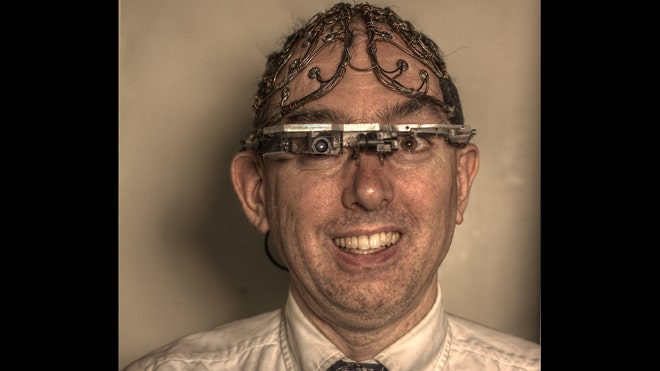
Soiled himself upon being thrown out causing cyborg elements to short circuit and malfunction — it says here. iPhone still not working.
Permalink Comments off
Ask George Smith e-mail: webmaster at dick destiny
Proof of a thousand words in a picture.
Soiled himself upon being thrown out causing cyborg elements to short circuit and malfunction — it says here. iPhone still not working.
Permalink Comments off
Today you fought the bank … and the bank won.
In over the transom, a suggestion to read a woeful story on the nature of Pasadena’s division of Satan Bank, OneWest.
I’ve walked by OneWest every day at lunch for the past three years. At one point I used to notice signs proclaiming it to be some sort of friendly community bank. This was all so much horse-shit.
Today you automatically expect a tail of evil and perfidy whenever the subject is a bank. In the US and much of the world banks are havens for criminals, a super Mafia constantly gaming the system, rigging the rules, putting fingers on the scale, swindling everyone everywhere.
This is no longer opinion, just straight statement of fact from the daily news of the past few years.
The site I’m about to direct you to is Bankster Law! It deals with my corporate neighbor, OneWest in Pasadena. The author relates his grinding battle with IndyMac and OneWest in Pasadena over a home construction loan. Yes, they are as bad as you think.
The trouble begins when IndyMac begins to fail — it’s money is all gone — and it starts misleading customers while short-changing them. The author finds IndyMac has reneged on the construction loan, declaring it complete with the house still unfinished.
Want to learn something of the system? Read Bleak House by Charles Dickens. You can download or read it on Gutenberg. Do you want to have your soul (and money) drained by Mr. Vholes? Do you want your mind stolen like poor Flite? Do you want your home to go to rack and ruin like Bleak House?
An excerpt, on “Bankster Psychology:
Deadbeat peasants won’t pay their bills! Let us pretend that the economy has nothing to do with people’s ability to pay. And let us also pretend that the bankster stealing doesn’t have anything to do with the economy! And let’s ignore the deadbeat bankster bailout, that has NOTHING to do with anything!
———-
The peasantry is being programmed by the banker run media to be selfish and jealous of others. So that when one is ripped off, others do not care. Why should you have a free house, they are trained to ask. As if your paying will make their paying more bearable. Wouldn’t it be wiser to ask why the bankers should be able to print free money at everyone’s expense.
And on OneWest:
My trouble with Pasadena began when I was given a loan from the original IndyMac Bank, FSB. Honestly, I liked most of the people I talked to from that bank. Those were the good old days when bankers did not hide their last names. When if you had a problem, a Vice President would give you his cell phone number and tell you to call him at home if necessary. This is when many of the California bankers had sunny Cali-style personalities and were not just churlish brutes. I only remember one lady that sounded like a goon, and I’ll bet you she is still working there at OneWest Bank …
[Later] OneWest Bank takes over. A filthier set of churlish thugs you cannot imagine. It seemed that they liked to call people even before payments were overdue in order to demand money …
Bankster Law! Read it.
Employee reviews of OneWest at Glassdoor.
Trust is essential to all financial transactions. When trust evaporates – or is smashed to oblivion through reckless and self-serving behavior at megabanks – the consequences can be dire.
The severity of the financial crisis in fall 2008 can be directly attributed to the collapse of trust among financial institutions. Cheating on Libor was not the only cause of this collapse but – if Mr. Bernanke is right and market participants knew what was going on – it must have contributed to it. — today, in the New York Times.
Permalink Comments off
The French know annoying when in the presence of it. Perhaps the most annoying people in the world, to good effect, were Charles de Gaulle and the character of Jacques Clouseau.
So DD blog could only smile upon reading this:
In response to a storm of controversy surrounding its treatment of Human Cyborg Steve Mann, McDonald’s has issued a statement, claiming that it has investigated the incident and determined that it “did not involve a physical altercation” when the University of Toronto Professor and father of wearable computing was ejected from one of its Paris restaurants.
Earlier this week, Mann made headlines when he published a blog post alleging that employees at the Champs-Élysées McDonald’s had tried to pull his EyeTap Glass off of his head and, when that failed, physically pushed him out the door and onto the street.
In an exclusive email interview, he told Laptop that the alleged assault took place after employees objected to the EyeTap’s potential use as a camera — the device captures images in real-time but does not save them by default — and tore up a doctor’s note that Mann showed them …
” … Perpetrator 2 angrily crumpled and ripped up the letter from my doctor … My other documentation was also destroyed by Perpetrator 1,” writes the Human Cyborg on his blog.
The Human Cyborg tried to contact McDonald’s, or “McDoands” — depending where you are in the blog post — in many ways. All failed.
“I also contacted the Embassy, Consulate, Police, etc., without much luck,” writes the Human Cyborg. By the looks of it, a US-issued demarche may be out of the question.
The Human Cyborg at Ray Live Forever’s Singularity School. The
word “annoying” doesn’t really do justice to this. Jump on the grenade warning.
“What happens if you have smart people?” asks the Human Cyborg in the video, meaning “smart” as in closer to being your smart augmented camera phone. “I put this theory forward called humanistic intelligence,” continues the name-dropping Human Cyborg while scribbling on his ‘telematic’ note pad.
His talk is so awesomely wretched it’s almost tempting to watch the whole 50 minutes. But only almost — then sense prevails.. (Here the Human Cyborg describes what he’s doing when giving a talk without cluing readers to how unbearable it is.)
“Seemingly …wearing a computer on your face doesn’t win you any friends,” reads one famous tech nerd publication in a post entitled “A Man Got His Ass Kicked for Wearing Digital Eye Glasses That Looked Like Google Glasses.”
In terms of publicity, Steve the Human Cyborg-Mann has parlayed a relatively minor altercation at a McDonald’s to a pretty good coup for his invention.
But is it really such a globe-spanning media-shared tragedy to be ejected from a corporate fast food joint in Paris for wearing an eyeGadget?
Viva la France!
Here’s a clogged paper by the Human Cyborg, one which was awarded a prize, with a now unintentionally hilarious paragraph (he’s as bad a writer as speaker):
My performance and in(ter)ventions attempt to reflect the technological hypocrisies of large bureaucratic organizations on a moralistic or humanistic level by way of firsthand encounters with low-level “clerks,” rather than the more traditional approach of writing letters to management, politicians or the like. By mirroring the structures of bureaucracy and complexity, I engage in a Reflectionist approach, that I have found is, in many situations, surprisingly more successful than writing letters to high-level officials.
In other words, the Human Cyborg is telling readers he does “performances” in which he acts like a dick to ” low-level clerks” for the purpose of getting through to higher-ups. Remarkable! Bet you never thought of that before.
This involves flashing your digital camera at “CLERKS” so that “the MANAGER will immediately become available, and the INDIVIDUAL [like the Human Cyborg] will no longer have to wait in line or come back on a certain special day to talk to the manager.”
“The CLERK, in fact, will desperately seek a manager to avoid being photographed … The matter will rapidly escalate to the highest level of authority,” writes the Human Cyborg.
Quite. Helps when you can complain to the media when that don;t work though.
It’s here.
The Atlantic magazine has a racket with the Google news team. The mag fills up its blogs with the most intelligence-insulting drivel it can push onto the web at network speed. And Google, taking some cash money bribe, immediately posts the material as “featured” material, guaranteeing views.
In this way we are given the short idiot ramble of one Nicola Twilley, someone who writes for the publication, featured in a magazine sponsored video musing that someday we might be able to end hunger by eating twigs. This as part of a special series called “The Future of X”.
No kidding.
“We Could Use Bacteria to Feed the Starving” read the title on Google. And it was reasonably interesting, as a teaser.
But when you went to it, this is what you got — some callow young girl without a science education or even much indication she really was interested in knowing anything about such, saying:
[We] could spray out bacteria in a dust … We could expand what we’re able to digest — maybe we’re inhaling bacteria that help us digest foods that are not currently digestible … Rather than growing more food to feed more people, maybe what we say is, ‘you know what? We can actually chew on a twig instead.
It’s the equivalent of spam blogging by and for The Atlantic.
If you search Twilley’s blog or her writings you will find nothing to show the vaguest interest in basic science. Which is what one needs a bit of to not come off as a smiling ninny going on about eating twigs.
This is what makes The Atlantic so mercilessly bad. Its editors defiantly and rather proudly publish the musings of the most senseless and therefore fit for the job on such subjects. As with its relentless pummeling of the Higgs Boson story.
This would not be so bad if it were just some run of the mill blog or delivered as some random nerd’s home video series on YouTube.
But no-o-o-o-o, that’s not the casel. The magazine, in conjunction with the giant of search, shoves this material daily onto the featured spaces of Google’s news tab. It is the worst kind of whoring for eyeballs. Indeed, if Google actually applied its own “guidelines for content developers” for not peddling SEO-tricked up trash to itself and The Atlantic, much of the latter’s blogs would be marginalized off the web.
As for a future of eating twigs after being seeded with unique microbial flora by city municipal services, one would no more spend time arguing down Twilley than one would have a dialogue with a can of paint.
Nicola Twilley, what made you think human beings are just like, uh, ruminants or termites? Not a trick question. Mother Nature took a long time to make them that way.
The “eat twigs” thing at the Atlantic.
A Google editors’ pick.
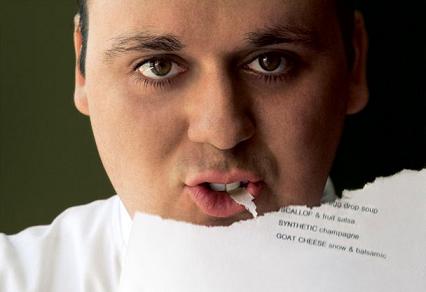
“Got paper?” asks Nicola Twilley.
If, after hearing my songs, just one human being is inspired to say something nasty to a friend, or perhaps to strike a loved one, it will all have been worth the while. — Tom Lehrer
More self-promotion at the Singularity School, Ray Kurzweil’s black hole for journalists who like stories about soon living forever, via PBS. Computers and advances in molecular genetics will soon cure all disease, fix up your decrepitude — just hang in there, like Ray — who — the segment at PBS shows, appears not to have slowed his aging, even though he does phosphatidylcholine for his membranes.
It takes one hundred fifty pills a day to defeat human entropy, according to Ray K., which — along with his phosphatidylcholine drip — is reminiscent of how double Nobel laureate Linus Pauling turned into a quack after going public with his Vitaimin C obsession. Treat the onrush of years aggressively or the sands of time will run out for you.
While Kurzweil lacks the same clout with stupid people enjoyed by Pauling and his Vitamin C stories years ago, one imagines the makers of phosphatidylcholine supplements are not displeased by his activities.
The approach of the Singularity can be visualized with this Ray chart.
Malaria, however, may just miss the boat. It stubbornly killed over 600,000 last year, still proving resistant to computer power combined with the miracle of molecular biology and nanobots.
Wait for the moment, if you can stand the rest, of Craig Venter giving it the brush.
Ray’s PBS performance, excerpted:
RAY KURZWEIL: The electronics will be so small, and we will put computerized devices that are the size of blood cells inside our body to keep us healthy. A new biological virus comes out, these little nanobots could download their software to combat that new pathogen.
PAUL SOLMAN: And so, immortality.
PAUL SOLMAN: Of course, as more time goes by, there will be more to remember. But Kurzweil says we will have augmented brains to retain more of it.
RAY KURZWEIL: Information defines your personality, your memories, your skills. And it really is information. And we ultimately will be able to capture that and actually recreate it. So then we will back ourselves up. People a hundred years from now will think it pretty amazing. People actually went through the day without backing up their mind file?
PAUL SOLMAN: His cholesterol, for example, has dropped from 280 to 100, thanks to a strict regimen of diet, exercise, statin drugs and nutritional supplements. He takes about 150 pills a day.
And then there are injections and I.V. drips for the more exotic substances.
RAY KURZWEIL: I will give you one example. In a baby, 90 percent of the cell membrane is made up of phosphatidylcholine. That substance is responsible for letting the nutrients in, letting toxins out, keeping the cell supple.
By the time you’re 90 years old, the level of phosphatidylcholine you have will be less than 10 percent of what you had as a child.
PAUL SOLMAN: So you’re getting shots of this?
RAY KURZWEIL: It’s an I.V ..,
More, from the Singularity School and the same reporter.
Thoon we will lith forether — here and here — from the archive.
When I was a young boy I saw a documentary about Ray Kurzweil and the Singularity School. “I am seven thousand three hundred and twenty two years old…”
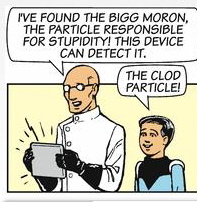
Alert reader Steve alerts us to the best comic on science journalism and lotsa other things, ever, a new Brewster Rockit here.
Stories on the Bigg Moron in the Google news tab — 187,000 today, down from eleventy million last week. Ten thousand of these were published by The Atlantic because they are whores and bribe Google.
“In sum: I personally continue to have no idea what the Higgs boson is … ,” writes Robert Wright for that magazine, in one of many posts. Wright, who’s Twitter handle is RobertWrighter, his bio informs, could’ve won a Pulitzer Prize but didn’t.
Permalink Comments off
Occasionally I run across futurist pabulum claiming we’ll soon be manufacturing everything we need at home, all due to the revolution in 3D printing. Just think of all the people in China, and everywhere else, we’ll finally be able to put out of work for good!
Not in our lifetime.
However, today comes news of a “hacker” who has used his 3D printer to make a working key to Chubb handcuffs. And, because he is motivated by the pure milk of human kindness, he will upload the digital blueprint to his handcuff key to the Internet later in the week. (If you read it all the way through, the article seems to stupidly maintain you can make assault rifles this way, too, a meme ignited and chased around by the tech nerd fanzine crowd over a year ago.)
Forbes’ Andy Greenberg reports that the security consultant, who goes by the name “Ray,??? used a 3-D printer to cheaply produce plastic versions of the keys to high-security handcuffs manufactured by the English company Chubb and the German company Bonowi. Ray’s plastic keys easily sprung open both firms’ cuffs.
This is a serious problem for handcuff makers …
How would [anyone] get such access? Well, Ray has one answer: According to Greenberg, “he plans to upload the CAD files for the Chubb key to the 3D-printing Web platform Thingiverse after the annual lockpicking conference LockCon later this week.???
Ray says his goal is not to undermine police, but to make them aware of their handcuffs’ vulnerabilities.
Yes, soon 3D printers will be in every apartment and household.
“Finish” for 3D printers from 1200 to 2500 USD: “fair to poor.”
Now, for $11,000, you can have excellent. Or you can stick with dropping a grand and some for a trinket maker, like this. You’ll be making your own Cracker Jack prizes in no time at all.
Over a year ago DD blog briefly mentioned Harrison Harmonicas, a manufacturing startup in Rockford.
Many news outlets flipped over Harrison. Readers and tv news viewers were informed, was using revolutionary 3d manufacturing to make ridiculously priced $180 blues harmonicas.
How’d that work out?
The company went out of business a year after it opened.
From the Rockford, Illinois, newspaper:
ROCKFORD — The number of complaints filed with the Illinois attorney general’s office against the now-shuttered Harrison Harmonicas continues to grow, driven by unhappy customers who ordered the company’s Rockford-made harmonicas and never received them.
Harrison Harmonicas folded about three months ago and informed customers that it was “no longer able to continue as a company??? via email …
Brad Harrison, founder of Harrison Harmonicas, made a name for himself when he won the 2008 Stateline FastPitch Competition, a contest for local entrepreneurs organized by Rockford’s EIGERlab. He went on to win $40,000 at the Innovate Illinois entrepreneur competition.
Harrison gained international press for being the only U.S.-based harmonica manufacturer and for his B-Radical harmonica design.
Harrison Harmonicas worked out of a space at EIGERlab, 605 Fulton Ave., but Harrison moved back to Chicago and took the company with him in May.
EIGERlab officials haven’t heard from Harrison since then.
Now get to work making your artisan handcuff keys. Plus, nothing impresses the ladies so much as telling them you made your own plastic handcuff key with your 3D printer. You’ll need to comb the poon out of your hair, yes sir.

A website full of cheap plastic tinker toys, unsightly plastic sculpture and trivial plastic widgets made expensive by milchtoasts and their 3D printing presses. They stockpile plans for 279 worthless plastic knives!
Permalink Comments off
From the wire, on one of the many gurus of the Culture of Lickspittle:
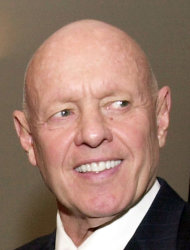
Stephen R. Covey, author of “The Seven Habits of Highly Effective People” as well as three other books that have all sold more than a million copies, has died. He was 79.
In a statement sent to employees of a Utah consulting firm Covey co-founded, his family said the writer and motivational speaker died at a hospital in Idaho Falls, Idaho, early Monday due to complications from a bicycle accident in April …
Covey was hospitalized after being knocked unconscious in the bicycle accident on a steep road in the foothills of Provo, Utah, about 45 miles south of Salt Lake City.
At the time, his publicist, Debra Lund, said doctors had not found any signs of long-term damage to his head.
Of minor interest to this blog because of his book’s alleged importance to the yearly thing called Keystone Boys State in Pennsy.
Keystone Boys State, one of the bane’s of DD’s existence long before he was DD, was originally dealt with here. (Click the link in graph before this one — ha-ha. Imagine how vexing it must be!)
In part, it reads:
Yes, one thinks learning to suck up, march in formation and follow pointless orders does teach something about life but one ought not to ask teenage kids to give up a week of summer to learn it. The current website seems to indicate Keystone Boys State is big with those junior ROTC operations which haven’t yet been run off public high school properties.
“The effort to get everyone involved at [KBS] manifests itself by having every ‘citizen’ elected, selected, assigned or appointed to leadership positions throughout the week. Each citizen also is provided with text materials based on organizational science and personal development exercises. Much of what we do is a spin-off of the Stephen Covey text, The 7 Habits of Highly Effective [People],” the boys camp proclaims.
“All citizens should become familiar with parliamentary procedures, ‘Robert’s Rules of Order’ and Covey’s The 7 Habits of Highly Effective People – NOW ! ! !”
“The 7 Habits of Highly Effective People” wasn’t required reading when DD attended Keystone Boys State, probably because it hadn’t yet been written.
It is another in a long line of publications from the self-help industry, filled with the kinds of slogans and advice people used to following orders and doing pointless institutional or corporate busy work for work’s sake think will help them improve their attitude so they can earn a quick million dollars, get promoted and exit the logjam of daily life.
“[Endless work] may be necessitated by constantly raising your sights,” writes Barbara Ehrenreich in “Bright-Sided: How Positive Thinking is Undermining America.” “If you are satisfied with your current condition, you need to ‘sharpen the saw,’ in self-help writer Stephen Covey’s words, and admit you could be doing better.”
Permalink Comments off
In the election of ’64, Lyndon Johnson considered Barry Goldwater an easy mark. Goldwater, a John Bircher, jabbered about nuclear war so much the Johnson campaign made a famous commercial, the Daisy ad, that helped destroy the man.
Goldwater appeared so extreme and virulently anti-Communist he conveyed the message he was ready to take down the entire world, to turn it into a cinder with America’s nuclear arsenal, to stop it.
The power to hit the nail on the head is now in President Obama’s corner. Mitt Romney has a frightening message, too, just like Barry Goldwater. He is ready to turn the rest of the country into an economic cinder, with the spoil reserved for the fittest at the very top. And the President is right to show the truth of it, having a potential “Daisy ad” in this:
The alert may notice the producer’s of the video have added varying digital reverberations to Romney’s “sing.” Some making it sound as if from a distant claustrophobic lo-fi radio broadcast, some from a dim tunnel, like an empty bomb-shelter. It’s an artful and devastating touch. My hat is off.
Showing Mitt Romney as he is can scare people. He is as inhuman to the daily experience as he appears to be. He’s a person who has created the image that if you took a phone call from him you’d get an invoice, as a file attachment from Bain, to the amount of $10,000 for 60 seconds of consult. The ad, without much effort, is loathsome.
And it’s not like it’s the first. Mitt Romney is a stationary target, one furnishing an always bigger and more inviting bull’s-eye. Outside his class Mitt Romney is appalling. But this commercial has the President’s image and voice in it up front, setting it apart from all the rest. He’s telling us, “Take a look at this guy, can you believe it?”
Mitt Romney is the symbol of the high-button asshole, the antithesis to whatever delusions anyone may cling to about the America dream. The more he appears on screen, the more people must turn away knowing the only reason he’s succeeded in life is because he’s had a mountain of cash to start and that he was in a place where “I like being able to fire people” (1 billion hits on Google) was the Golden Rule.
Mitt Romney is a gift to the art of lampoon.
Permalink Comments off
« Previous Page — « Previous entries « Previous Page · Next Page » Next entries » — Next Page »
