04.08.13
Cartoon from New Serbia
In demeanor, some similarities to WhiteManistan.
Ask George Smith e-mail: webmaster at dick destiny
I suggest reading Paul Krugman’s The Aged of Diminished Expectations but it was done way before he was famous.
“The problem with poverty is that it has basically exhausted the patience of the general public,??? he wrote.
That was in 1992, the book’s fifth printing, and things were lousy but not 2013 lousy. Krugman spent some time discussing inequality and the explosion in the poverty level.
“[Any] systemic initiative to raise the incomes of the poor seems unlikely for many years … The growing gap between the rich and poor was arguably the central fact about economic life in America in the 1980s. But no policy changes now under discussion seem likely to narrow the gap significantly.???
Indeed, nothing changed. Everything got worse.
There is another factor that has been at work as a kind of salve groupthink, as long as I can remember.
It’s an obvious social trope, an American shibboleth: Poverty is a condition that exists for you as a matter of moral choice, a personal deficiency. Basically — sin. You are unclean, deficient, bad, of low character, if you are poor in America.
Poverty is defined for almost half, maybe more than half the people in this country, as a personal choice, an evil one. And therefore nothing should be done about it because to do so is to aid in evil. The growth in poverty, the need for more food stamp subsidization, then, only means that more and more people are forsaking character, rectitude and natural godly American ways, mores and traditions.
Books become bestsellers, repugnant nobodies are transformed into celebrities and wisemen, politicians made into warrior kings on it.
It doesn’t matter what the statistic show. If corporate profits have risen to astronomical levels while wiping out everyone else, it is of no consequence.
Facts don’t matter, only the twisted pseudo-morality of alleged right thinking.
Hand in hand with this has been a decades long corruption of language for the express purpose of embedding the idea that wealth and poverty are personal choices. And woe to those who choose badly because all the information is out there, perhaps in career training, or advice from a column, or if you’re really lucky, a lecture from the wealthy, for you to attain great success.
To this end the Microsoft Network and Yahoo, and everyone else — run weekly pieces, paid for by career services and such, on what jobs pay the most, and which careers to avoid.
These are all about filling corporate America’s immediate term needs. Period. You read “top 5? paying jobs columns for a few weeks and they’re always the same.
There’s a reptilian and repellent nature present and one quickly comes to detest the nobody writers and editors who are responsible.
Underlying it all is the phony ethos — and ethos is not a good word, it doesn’t get at the inner poison — that one is primarily defined by one’s job, the circumstance of always having a job, and how much that jobs earns.
Which dovetails with the entrenched belief that to have a low-paying job that leaves one in poverty, again, is a personal choice.
For instance, take the reconfiguration of the old word “equity??? in America. It meansquality of being just or fair in a system. But now the usage is commonly set to what a billionaire’s stake is in whatever he owns. (Indeed, if you just use the word “equity” in Google, all that comes back is the secondary business meaning, corporate American media has so corroded it. Investopedia’s definition, of all things, is the third ranked by the search engine. You’d think the word was coined just for the billionaire class in the US.)
Two weeks ago I read one of these careers and jobs columns and the author had come up with five things the really wealthy are said to understand better than the proles.
Number one was equity.
Equity is not something one just goes out to pick up.
Yet that is what the piece indicated. Equity, it implied, was maybe something you could acquire, like an education, or experience, only with much more effort, and maybe not at all if you weren’t or aren’t smart enough.
Those not-billionaires who did not understand equity, as a consequence, could never be truly that successful.
In reality, you have to buy it, or be contracted into it, as by inheritance. And it’s millionaire/billionaire expensive.
Who do you know, in their jobs, or anything else, have ever been in a position to get equity?
So here is a deep perversion of language, made so for the benefit of an intrinsically unfair system, the exact opposite of its original meaning.
In the new American usage, but not the dictionary’s first usage, equity also equals virtue.
Equity was the very essence of the rotting heart of Mitt Romney, which he and the billionaires who supported him interpreted as virtue. Romney was born into equity.
Even though the public demonstrably didn’t see the virtue in it, this astonished the man and his family.
Equity has come to mean the ability to ruin a vast holding and everyone under the top tier involved in that holding for the sake of getting more, for attaining equal or even more equity in something else. Then rinse and repeat.
Equity is what you count on, or counted on at Facebook, to make you an instant multi-millionaire in an inflated IPO.
Equity is an essential part of the rigged economic game, something that the 1 percent has, not something large numbers of Americans have access to. Equity means nothing to people whose 401k’s have taken a beating and ruined plans for retirement.
Equity means one thing for the topmost, quite another for everyone else.
Wouldn’t we all like to have equity?!
Again, choosing again from Paul Krugman’s 1992 work, The Age of Diminished Expectations:
Why does unemployment matter? Partly because high unemployment means that potential productive workers are not being used … because high unemployment brings persistent poverty. Beyond this, however, the availability of jobs plays a key role in how our society hangs together. A society in which young people can routinely expect to get jobs on leaving school, and to remain gainfully employed except for occasional spells for their adult lives, is going to be a very different place from one in which work is a privilege that is unavailable to many people — even if the welfare state is generous to the unemployed …
And this, because it is such an unpleasant description of where we are now — America is definitely a society that no longer holds together at all — has made it attractive for many to cling to the idea that being down is a personal matter, a sinful one.
Since my graduation from Lehigh, this condition has been the norm. Recessions, business fluctuations beyond control and always diminishing job prospects. Inequality increasing, compensation decreasing, much of the time without being noticed or remarked upon except with the usual condemnations that someone has had it coming because they’ve lived high on the hog for too long and they’ll have to learn the hard way it’s time to pull themselves up by their bootstraps.
Last week’s job statistics showed more people just leaving the workforce, on which Barbara Ehrenreich commented on her Facebook page:
The bright side of today’s unemployment stats: The labor force participation rate is declining, meaning that fewer people are falling for the old “job” scam, you know– show up every morning, work your butt off and every couple of weeks we’ll make a contribution toward your bus fare and lunch money.
 Corporate profits versus ours. Something’s burning up the charts and it’s not you.
Hat tip to Pine View Farm where I worked some of this out of my system in advance.
Permalink Comments off
This morning the Pasadena Star-News ran an opinion piece that started life as a blog post at Foreign Policy last week.
Entitled “North Korea’s threat to Guam is deadly serious,” I re-posted part of it last week here because of the appearance of John Pike.
Foreign Policy, like the rest of that part of the national security infrastructure establishment responsible for threat-seeking and writing memos of rationalization on who needs to be blasted, is useless.
For instance, I doubt there’s anyone in Pasadena, not Asian, under 50 who knows where or what Guam is.
In fact, I doubt there’s anyone in the entire chain of small newspapers to which the Star News belongs who ever reads Foreign Policy. Yet little crummy newspapers over the United States picked up the absurd thing, because it’s a classic troll piece.
Foreign Policy, like others in the national security metroplex, would like a war. Because the United States has no foreign policy other than conducting war, starting pre-emptive war or blowing up people in poor countries with drones.
Everyone would feel good because the mouthpieces at the old think tanks would be empowered to crank it into overdrive again.
The North Korean imbroglio plays like a cartoon.
And that’s because North Korea’s Kim Jong Un is a living cartoon character, an absurd-looking fool who wouldn’t last a minute in an American supermarket without being ushered out by security for doing something crazy and annoying, like spilling all the potatoes in the produce section onto the floor so everyone knew he had arrived. His only friend in the world is another person who is crazy and annoying, Dennis Rodman.
What happens if Kim Jong Un shoots a rocket at Guam, no one can tell what is in it, and like everything from North Korea, it’s substandard and breaks up or goes crooked and doesn’t hit anything?
Do we try to shoot it down? Go out to part of the ocean where we think it landed looking for stuff to see if we have to unleash Strategic Command to destroy North Korea? (I asked Pike these questions in a facetious e-mail, like this post, this morning. “Yup,” he answered.)
North Korea is Serbia in 1914.
We should look at the bright side. A world war might bring on necessary stimulus. At least until China opens up its nuclear arsenal.
Permalink Comments off
We just don’t call it that.
From Germaine Greer in 2009, writing for the Guardian:
Thatcher’s strength derived directly from her limitations. If she had been better read, if she had been afflicted with imagination, if she had had a sense of humour, if she had had anywhere near as much insight into the lives of ordinary people as she claimed to have, she would have been unable to pursue her headlong career, riding roughshod over the consensus towards the property-owning debtor economy in which we now struggle. If socialism had been in better shape, she would not have been able to turn it into a dirty word or confuse it with totalitarianism and state monopoly capitalism. If the trade unions had not betrayed their own class, if they had understood the importance of
organising all workers, including women, including those in the service sector, if they had not institutionalised inequality, the people might have defended the cause of labour.Thatcher thought that she and Reagan overthrew the Soviet Union, but the fact is that, like old Labour, it simply fell apart. The Thatcher phenomenon was only made possible by the weakness and indecisiveness of the opposition. It is justice of the most poetic kind that Thatcher’s is now the evil empire and Thatcherism a dirty word.
Institutionalized inequality — that’s us.
Permalink Comments off
The web is so full of worthless news organizations it is hard to pick out truly spectacular examples of BAD.
However, today Benzinga made it easy.
On its website:
Benzinga is a dynamic and innovative financial media outlet that empowers investors with high-quality, unique content that is coveted by Wall Street’s top traders. Benzinga provides timely, actionable ideas that help users navigate even the most uncertain and volatile markets – in real-time with an unmatched caliber.
4. Insure Your Assets
The best time to prepare for nuclear catastrophe is not after the fact. Review your homeowner’s and auto insurance policies, making sure that your coverage extends to nuclear attacks — in most cases, it doesn’t.
Checking life insurance policies and protecting any other assets you may have is also a good idea.
Insure your assets.
And:
Beggars can’t be choosers following a nuclear attack, so prepare yourself to feast on pigeon, rabbit and other readily available sources of protein. These can be killed with a BB gun or crossbow. Remember to skin the animal before you eat.
You might almost think it’s a humor piece were it not for the careful inclusion of all relevant stock tickers/abbreviations.
From the not-moron parts, John Pike — someone I know on a weekly basis, in Newsday:
By now, Pike said he is worried North Korea has painted itself into a corner situation where it must make good on its threats or risk losing face and credibility …
“The North Koreans have run out of non-kinetic provocations, haven’t they? I mean, how many times can you declare war?” he said. “If they don’t start shooting within the next week or 10 days, everybody’s going to say they’re a bunch of chickens, that they can talk the talk but they’re not willing to walk the walk, aren’t they? And they’re going to say of Kim Jong Un, he don’t know how to run nothing but his mouth,” to paraphrase a classic Marion Barry quote.
But even for a hardware expert like Pike, the U.S. solution does not lie in deploying more weapons. South Korea and the Americans, he argued, “can take it up the escalation ladder as far as the North wants to go.” The thing that could change North Korea’s tune, he said, is China.
“The North would run out of rubble to bounce before the Americans would run out of hydrogen bombs.”
Apt, it made me laugh.
To which I’d add, no one wanted WWI after the Archduke Franz Ferdinand was assassinated by some nut from Serbia. But look what happened.
Our president has demonstrated, quite admirably during his first term, that he’s poor at dealing with crazy people. And that’s our crazy people.
Permalink Comments off
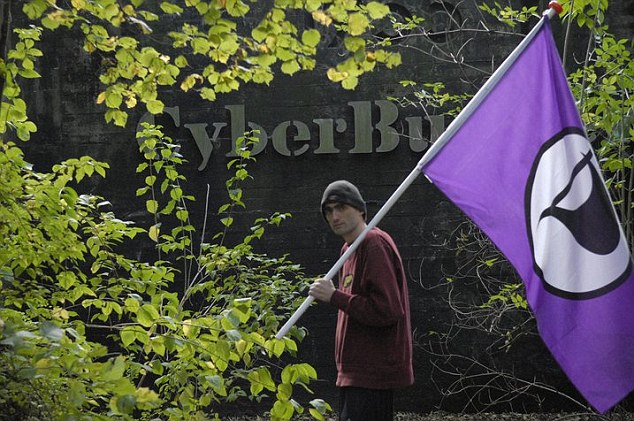
The Duchy of Grand Fenwick, aka the Republic of CyberBunker, was said to have attacked SpamHaus and the Internet this week. And most people missed it except for the New York Times and Ars Technica.
I’ve repeated it countless times. Ten years ago the mainstream press just unilaterally quit doing its job on security matters. Serious journalism and critical thinking, as opposed to propagandizing and stenography, simply blew away and was never replaced.
It’s a theme I’ve carped on for years, going all the way back to anti-virus king John McAfee’s manipulations on the Michelangelo virus in 1992.
From the Guardian, on the great cyberwar everyone missed, which I only saw because of Frank at Pine View Farm:
This is the danger of the “dark age of journalism”, as it has been called. The training of the old Reuters reporter is replaced by one of political and corporate collusion. The separation between newsrooms and public relations agencies growing ever thinner as reporters rush to fill space at all costs, regardless of truth.
Even after she’d written the piece in the New York Times, tech reporter Nicole Perlroth tweeted how she was still getting targeted by corporate PRs to cover the “story”: “Hi Nicole, News is just breaking on the biggest cyber-attack in history. Are you planning on covering?”
The collapse of journalism combined with complex, fast-changing technology offers a wealth of opportunity for propagandists. In the soil of ignorance, fear can easily be sown. So it is with cyberwarfare.
The writer, Heather Brooke, probably didn’t have the space to get deep into the rise of web shoeshine news publishing, the fact that sensation, exaggeration and corporate tech fictions and trivialities are about all they exist for.
In charge at CyberBunker is Sven Olaf Kamphuis, who styles himself the ‘Minister of Telecommunications and Foreign Affairs’ of the ‘Republic CyberBunker’ …
Within its 15ft reinforced concrete walls are 175,000 cubic feet of office space, airlocks, a 750KW diesel generator, fuel reserves and a 2,500-gallon freshwater tank.
Its inhabitants can allegedly survive for ten years without assistance from the outside world.
CyberBunker’s website claims: ‘Dutch authorities and the police have made several attempts to enter the bunker by force. None of these attempts were successful.’
Permalink Comments off
A must read from the London Review of Books:
The Google Bus means so many things. It means that the minions of the non-petroleum company most bent on world domination can live in San Francisco but work in Silicon Valley without going through a hair-raising commute by car – I overheard someone note recently that the buses shortened her daily commute to 3.5 hours from 4.5. It means that unlike gigantic employers in other times and places, the corporations of Silicon Valley aren’t much interested in improving public transport, and in fact the many corporations providing private transport are undermining the financial basis for the commuter train. It means that San Francisco, capital of the west from the Gold Rush to some point in the 20th century when Los Angeles overshadowed it, is now a bedroom community for the tech capital of the world at the other end of the peninsula.
There are advantages to being an edge, as California long was, but Silicon Valley has made us the centre. Five of the six most-visited websites in the world are here, in ranked order: Facebook, Google, YouTube (which Google owns), Yahoo! and Wikipedia …
Note, not a word on any of the digital wonders actually transforming life in the area, except by accumulation of wealth. Our tech overlords are not developing the next indoor plumbing or even the polio vaccine.
After 20 years on the net it is a culture I have come to viscerally dislike.
The article makes a good read after news of Yahoo paying 17 million to a teenager for the Summly app. His is a business that employs ten people, for a product that makes news available on smartphones.
Yahoo’s news arm is already terrible, as are those of many web portals.
Compacting crap so it shows nicely as an abstract in even less space on a smartphone screen does not advance anyone although 17 million may have been what the US “market” would pay for it.
Smartphones are not transformative and you can test this by going to where the underclass lives. In Pasadena, where they live, where I live, the effective storefront businesses are Target, cheap eateries and smartphone suppliers. The poor all have smartphones on budget plans. They cannot afford desktop computing or the additional broadband access and their only point of contact with the net on a big screen is institutionally, school or work. Their lives are not transformed by having Android-equipped mobile devices with unlimited music and data. Poverty is not ameliorated by any powers granted through mass possession of mobile phones that take pictures or the ability to socially network.
So what exactly is so great about the culture that pays 17-mil to the dweeb who made Summly? Or any other of the hundreds of valley firms covered daily by TechCrunch?
They make apps — ephemeral stuff — that fit the growing divide, conveniences for the very wealthy, minor diversions for those who have nothing, people who have given up land line telephony.
Proven by the dismal science, inequality in the US is not driven by a skills gap.
The alleged innate genius of Stanford dweebs and the tech valley’s trillion dollar value is not now changing our world for the better. They do not address the big problems of the time any more than a shale oil mining boom in the Dakotas does.
It’s easy to go on and on with big examples, not all in the Silicon Valley, but of the culture.
Malaria has not yielded to Bill Gates or Silicon Valley venture capitalists bankrolling synthetic biology firms.
Also Consider Elon Musk, who made his fortune with PayPal, now ubiquitous.
What if you have nothing or the US economy pays so poorly that your line of labor is either nonexistent or not viable without foodstamps and the earned income tax credit? Then of what use is PayPal? There is still a Western Union send-cash station at both supermarkets near me.
Now Musk is haled for new businesses, making an electric car of indeterminate quality for the very top slice of US auto-drivers. And SpaceX, a business that of course will rely on taxpayer-funded contracts for NASA resupply.
Is near space being exploited to the benefit for a majority of Americans? Well, it was.
The infrastructure for global telecommunications and navigation were paid for by the US taxpayer but Elon Musk and SpaceX add nothing to this, they just exploit it for the very top, relatively minor vestigial interests. The US military which has a very big and clandestine space program, also funded by the taxpayer, doesn’t give a fig about SpaceX. It doesn’t need it.
Jeff Bezos of Amazon may have used his vast wealth from digital Wal-martization and sweat-shopping to recover pieces of the Saturn V boosters but all that was paid for by the US middle class and made by Wernher von Braun and his colleagues decades ago.
What does Jeff Bezos bring to it? It’s obvious part of the idea is as a publicity stunt, a tech billionaire’s personal spectacle and vanity thing.
Permalink Comments off
Old tune, in honor of the mainstream media and its celebrities.
More appropriate. Nothing changes, entropy only increases.
Permalink Comments off
Tough competition, too.

Consolation prize: No more Jeb Bush.
Permalink Comments off

Tom Tomorrow making the now obvious point that being wrong about everything means nothing. In fact, is good for the career if you’re in the top bracket.
Another rundown: Irrationality and fraud were career builders and not one suffered for it.
And, once again, my pieces condensed at GlobalSecurity.Org.
Permalink Comments off
« Previous Page — « Previous entries « Previous Page · Next Page » Next entries » — Next Page »