According to the kind, caring and considerate left, you have every right to be a crazy druggie and roam the streets with no means of support …
Years ago the left clamored that mental institutions violated the rights of those with mental illnesses. The American Civil Liberties Union even sued on their behalf. The result was the doors of the cuckoo nests were flung open and the patients stumbled out.
Now they are everywhere. You can’t visit any city in America without encountering dirty people who are severely mentally impaired roaming the streets …
The real discussion that needs to occur in America is how we finally throw off the shackles of political correctness, quit worrying about “feelings??? and simply restrict the rights of psychotics by making it easier to lock them up
It’s no White-House-leaked top secret that the business community does not trust the president. His statements, policies and clear and present anti-business agenda have shown contempt for the free enterprise system ever since he took up residence in the White House and began his systematic Cloward-Piven-driven destruction of our economy.
The president and his Fedzilla anti-business cohorts want to reshape America into a socialist state …
Only chumps, punks, bloodsuckers and fools would choose the guy with no [business] experience and who despises the free market. The producers are solidly in the camp of Mitt Romney.
Ted mentions he plays Gibson guitars and that the company is under attack from the government. Which I’ve covered before.
The artist’s conception of Nugent, alongside a push mower and gardening tools, has him in silhouette with Fenders. Doh!
Unintentionally hilarious line, from one of the thousands of stories on the horde of angry white overweight people proudly showing Chick-fil-A that they, too, hate teh gays:
For many Americans, the idea of eating “forbidden fruit” like fried chicken sandwiches and french [fries] already taps into a rebellious spirit.
“You get that confluence,” [some nobody] said. “This food is under threat already, and then you have these other currents going on.”
Truly, I say to you, for hating on the Sodomites, today you will be with me and Mike Huckabee in the paradise of Chick-fil-A. — Chapter 1, The Compleat Sayings of American Jesus
An automated stock trading program suddenly flooded the market with millions of trades Wednesday morning, spreading turmoil across Wall Street and drawing renewed attention to the fragility and instability of the nation’s stock markets.
While the broad stock indexes quickly recovered and ended the day slightly down, it was the latest black eye for the financial markets.
The errant trades began hitting exchanges almost as soon as the opening bell rang and came from a single New Jersey broker that specializes in computer-driven trading, the Knight Capital Group. Shares of more than 100 companies, including big names like Alcoa, Citigroup and Ford suddenly spiked up or down. The New York Stock Exchange had most of the mistaken orders, but all of the nation’s exchanges executed trades for Knight and all agreed to cancel the trading in six stocks that had especially extreme movements …
The trades placed by Knight may have left the firm with millions of shares of overpriced stocks that quickly lost their value after the chaos ended, but the company did not comment on its potential losses …
Knight later said that “a technology issue occurred??? in the division of the company that uses computer algorithms to buy and sell stocks from other market participants.
On the other hand, if you conduct a meaningful public poll on how much average Americans really care about “the financial sector” being protected against cyberattacks, you might get an earful on how they’d like to be protected from the financial sector.
Good news, lads. Good news! A buffoon to rival the ‘Mericans.
Bradley Wiggins promised to forgo the traditional flute of champagne when he won the Tour de France. The British cyclist made up for it after winning an Olympic gold medal with a booze binge …
”Getting wasted,” he posted on Twitter along with a picture of himself posing with a drink and flashing a V for victory with St. Paul’s Cathedral gleaming in the background …
”Blind drunk at the minute and overwhelmed,” he posted later. ”It’s been emotional.” — from the wire
Two journalists at ProPublica blow Mr. Keith Alexander and corporate computer security firm reports on trillion dollar losses to computer crime out of the water here.
The piece drills in on the much publicized claim that this constitutes “the greatest transfer of wealth in history” and its foundation. Or total lack of one.
A handful of media stories, blog posts and academic studies have previously expressed skepticism about these attention-getting estimates, but this has not stopped an array of government officials and politicians from continuing to publicly cite them as authoritative. Now, an examination of their origins by ProPublica has found new grounds to question the data and methods used to generate these numbers, which McAfee and Symantec say they stand behind.
One of the figures Alexander attributed to Symantec — the $250 billion in annual losses from intellectual property theft — was indeed mentioned in a Symantec report, but it is not a Symantec number and its source remains a mystery.
McAfee’s trillion-dollar estimate is questioned even by the three independent researchers from Purdue University whom McAfee credits with analyzing the raw data from which the estimate was derived. “I was really kind of appalled when the number came out in news reports, the trillion dollars, because that was just way, way large,” said Eugene Spafford, a computer science professor at Purdue.
Ross Anderson, a security engineering professor at University of Cambridge [who participated in the research] … told ProPublica that he did not know about the $1 trillion estimate before it was announced. “I would have objected at the time had I known about it,” he said. “The intellectual quality of this ($1 trillion number) is below abysmal.”
The use of these estimates comes amid increased debate about cyberattacks; warnings of a digital Pearl Harbor are becoming almost routine.
Computer scientists Dinei Florencio and Cormac Herley, who work at Microsoft Research, the software giant’s computer science lab, recently wrote a paper, “Sex, Lies and Cyber-crime Surveys,” (PDF) that sharply criticized these sorts of surveys. “Our assessment of the quality of cyber-crime surveys is harsh: they are so compromised and biased that no faith whatever can be placed in their findings,” their report said. “We are not alone in this judgment. Most research teams who have looked at the survey data on cyber-crime have reached similarly negative conclusions.”
The figures from the Shoeshine Service are “scientifically worthless … but valuable from a marketing perspective,” adds another boffin.
Compromised. Biased. No faith, whatsoever. Scientifically worthless. A quality below abysmal.
The greatest transfer of wealth in history … according to the sticker on this here box of McAfee Cracker Jack.
The ProPublica article briefly goes into the history of McAfee Associates. The firm’s founder, John McAfee — long gone, misled journalists and others on computer virus infections for publicity, most famously, in 1992, with the Michelangelo computer virus.
And that story is excerpted from the book, The Virus Creation Labs, here.
Few things are more odious than the claims issued almost daily from various politicians and our cyberwarrior national security experts on the nature of the threat. The politicians stand for the 1 percent. And the cyberwarriors are part of the Shoeshiner Service, errand fulfillment for it. They acknowledge no reality. For them, the problem is cyberattack on the economy, the water, power, because defense against calamitous unknowns is a direct way to national security spending.
Unfortunately, the problem is economic collapse, stagnation, recession, depression. It came upon us over years, accelerated in the last decade, and has nothing to do with vulnerability in cyberspace.
Make no mistake, the failure of the economy to work for every American is a security problem. The middle class, what’s left of it, and the underclass receive no tangible benefit from increased spending in cyberdefense. None. It’s kind of like that trickle-down trash you’ve heard about for twenty or thirty years but never actually seen.
I’m well-equipped to judge and over two decades of studying and covering the issues, I’ve seen little to zero accrued benefit from cyberdefense at any level although I have seen the the day to day battle of scanning for malware, reading news stories about the theft of untold treasure in cyberspace and … well, it just goes on and on. And you’re in the same boat as me.
There is no motivation for any alleged enemy to do so, other than the old, cliched, and repeated ad nauseam twin cants of “since they can’t attack us head-on, they’ll attack in cyberspace” and “they hate us for [fill in the blank].”
However, what is happening, and will continue to happen, is the diminishing of general populace’s ability to pay for water and power services equal to what is proper for a First World nation.
By the same token, the financial system, when it fails, is always made whole by the government. However, nobody in the general populace is ever made whole. So what’s the big deal with the invasion of financial services? It’s crime. But “a credit-card processing center is hacked and millions of cards are canceled because the numbers are posted on internet sites!” says someone. Yeah, so, but is it an existential threat to the land of the free? And credit card information hasn’t been exposed before? Like it doesn’t happen a lot? Right.
So how do you secure an infrastructure the way it is recommended it be secured when the majority has no underlying belief in the worth of it?
It’s like trying to prop up a corrupt government. You can try to ignore the root causes, treat symptoms or put the worst consequences off for awhile with more and more invasive and predatory technological protocols but the underlying disease is not cured.
Which brings us to the primary motivator for the escalating threatening talk about digital menace.
It’s about more rake-off.
Spending priorities must be shifted. If any austerity is handed to the defense structure, contractor defense services for cyberspace are a growth opportunity. If the government, namely the taxpayer, can be legislatively pressured into paying for mandated security upgrades to the private sector, then this is a protected stimulus.
Comparing today’s lack of preparation to defend against a major cyber attack to the nation’s security lapses before 9/11, U.S. Sen. Dick Durbin, D-Ill., said, “There’s an overwhelming, bipartisan consensus among officials in the intelligence, defense and national security community that America is incredibly vulnerable to a cyber attack that can be launched at any moment from anywhere in the world.???
Current and former U.S. intelligence officials, Durbin said, have jointly warned against a “catastrophic cyber attack that could cripple our nation’s economy, cause widespread loss of life, and send our economy into freefall.???
Cripple our economy [and] send our economy into a freefall. Plus widespread loss of life. That pretty much covers it.
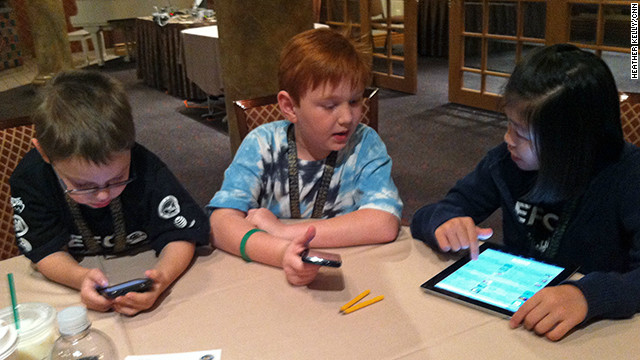
With so many dangers, why would parents encourage their children to hack at all? Def Con Kids organizers believe in the good that can come from hacking, including making the country more secure and helping encourage freedom of speech around the world … — here