Panetta: The reality is that there is the cyber capability to basically bring down our power grid to create … to paralyze our financial system in this country to virtually paralyze our country. And I think we have to be prepared not only to defend against that kind of attack but if necessary we are going to have to be prepared to be able to be aggressive when it comes to cyber efforts as well. We’ve got to develop the technology, the capability, we’ve got to be able to defend this country.
60 Minutes has also been the go-to place if you want to make an unchallenged claim on cyberwar. Here it is from 2010:
“Can you imagine your life without electric power?” Retired Admiral Mike McConnell asked correspondent Steve Kroft …
“If I were an attacker and I wanted to do strategic damage to the United States, I would either take the cold of winter or the heat of summer, I probably would sack electric power on the U.S. East Cost, maybe the West Coast, and attempt to cause a cascading effect. All of those things are in the art of the possible from a sophisticated attacker,” McConnell explained.
“Do you believe our adversaries have the capability of bringing down a power grid?” Kroft asked.
“I do,” McConnell replied.
The actual measurable reality is that this has been repeated thousands of times over the last fifteen years. In this it is like the story of electromagnetic pulse doom, which also features of hundreds of stories over the past decade asking you to imagine what your life would be like without electricity.
As a matter of observation, it’s the only thing the authority figure defense establishment salesmen and fearmongers can think of to get maximum attention. What’ll we do without power? We’ll all die! And it can happen now!
“China could launch a devastating computer-run sabotage operation by attacking U.S. oil refineries, many of which are grouped closely together in areas of Texas, New Jersey and California.”
“A [Chinese] computer attacker could penetrate the electronic ‘gate’ that controls refinery operations and cause fires or toxic chemical spills . . . ”
Same year, ITN Network from England
“In the City of London, if you were to hit two or three places – nor more than that -they would be able to turn the city off and that would stop the banking system and it would stop the share-trading system . . . Identifying the crazed, skilled cyber attacker is perhaps the single most difficult task that the cyber spooks face at the moment,” said Peter Sommer from the London School of Economics for ITN.
Same year, a State Department memo
“Assistant Secretary of State for Diplomatic Security David Carpenter told [an] audience of business security specialists that they must educate themselves about the mounting threats of cyber-crime. He said terrorists are constantly devising new ways ‘to cripple business, government, and infrastructure,’ and inventing new methods of ‘creative destruction.'”
1999, Richard Clarke, talking to the Associated Press:
“We could wake one morning and find a city, or a sector of the country, or the whole country have an electric power problem, a transportation problem or a telecommunication problem because there was a surprise attack using information warfare.”
1999, the Los Angeles Times
George Tenet, CIA director is quoted: “Potential targets are not only government computers but the lifelines we all take for granted — our power grids and our water and transportation systems.”
Another Pentagon wargame scenario, this time called Zenith Star, is invoked. The standard pro forma claims are issued: “enemy hackers supposedly had triggered blackouts . . . They paralyzed 911 systems . .
.
” . . . a team of NSA hackers proved that they could easily disable power, telephones and oil pipelines across the country as well as Pentagon warfighting capabilities.”
Richard Clarke, quoted in the New York Times, early 1999
“I’m talking about people shutting down a city’s electricity . . . shutting down 911 systems, shutting down telephone networks and transportation systems. You black out a city, people die. Black out lots of cities, lots of people die.”
Scripps News Service, 1999
While our information warriors are said to be the mightiest in the world, the Scripps Howard piece also reads: “A nation that would have no chance challenging America’s conventional or nuclear forces might well prevail in a computer attack.”
“Among the most sophisticated are India, Syria and Iran [anonymous] experts say.”
” . . . But a cyberattack on a country’s power grid, while militarily defensible, can cause more calamities than a missile and far more ‘collateral damage’ to innocents than it causes harm to an enemy’s forces or ability to fight.”
Occasionally, an official — long since gone, would gamely try to rephrase matters. From an obscure thing the Defense Information and Electronic Report, 1999.
“[The term Electronic Peal Harbor] connotes this ‘lights-out’ idea,” [Jeffrey Hunker, an official during the Clinton administration] said for Defense Information. “It tends to oversimplify the threat, which ranges from existential terrorism to overt acts to overthrow the military. . . . It trivializes the real [danger], which I think is much more than what’s been understood.”
Richard Clarke, again in the LA Times in 1999
“An enemy could systematically disrupt banking, transportation, utilities, finance, government functions and defense … It’s cheaper and easier than building a nuclear weapon.”
For NPR in 1999, GOP whacko REp. Curt Weldon, long since run out of Congress
“[Curt] Weldon says a successful hacker could disrupt civilian life, striking hospitals or train systems …
WELDON: “It’s not a matter of if America has an electronic Pearl Harbor, but when.”
The Christian Science Monitor, when it was still a real newspaper, and not a minor news website due to reader indifference, in 1999
“. . . Operation Eligible Receiver demonstrated the potential vulnerability of the U.S. government’s information systems. The National Security Agency hired 35 hackers to launch simulated attacks on the national information structure. The hackers obtained ‘root access’ – the highest level of control – in 36 of the government’s 40,000 networks.
“If the exercise had been real, the attackers would have been able to create power outages across Los Angeles, Chicago, Washington, and New York.”
Federal Computer Week, a brigadier is interviewed, 1998
“A digital enemy can bypass the military and take down critical infrastructure — automated power plants, stock markets and transportation systems — and disable this nation without firing a shot . . . Call it a virtual Cold War . . .”
WIRED, May 1997
1. “We will have a cyber equivalent of Pearl Harbor at some point, and we do not want to wait for that wake-up call,” attributed to former U.S. Deputy Atty. General Jamie Gorelick.
2. “I-war can be the kind of neat, conceptually contained electronic Pearl Harbor scenario that Washington scenarists like — collapsing power grids, a stock market software bomb, an electromagnetic pulse that takes the phone system out.”
This article went on to get a credit in the last Bruce Willis Die Hard movie over a decade later.
Authoritative, accurate and long, it captures the establishment record on the matter.
It is the meme of turning the United States off via remote control. Again and again and again.
It is the only way to get unthinking people to accept how, maybe, enemy nations, bad actors, disgruntled insiders, anyone on the other side of the barricades of Fortress America, will take the country down without immediately getting bombed into rubble.
Now, it’s also more and more about protecting the 1 percent from the imagined predations of the paupers.
How else to interpret something like “to paralyze our financial system in this country …”
Nobody in the great mass that is not the 1 percent or in the service of the same cares about attacks on the American financial system. They do, on the other hand, wish our financial system would stop attacking them.
This is Leon Panetta doing the dance for the 1 percent, signaling the masters that he’s doing his best to see more swag comes their way in defense contracts for protecting cyberspace.
Keenly aware of conventional U.S. military dominance in the region, Iran has adopted what strategists describe as an “asymmetric” approach.
Missiles mounted on civilian trucks can be concealed around the coastline, tiny civilian dhows and fishing vessels can be used to lay mines, and midget submarines can be hidden in the shallows to launch more sophisticated “smart mines” and homing torpedoes.
Iran is also believed to have built up fleets of perhaps hundreds of small fast attack craft including tiny suicide speedboats, learning from the example of Sri Lanka’s Tamil Tiger rebels who used such methods in a war with the government.
Sri Lanka, the island country which a long time ago was known as Ceylon — most will instinctively know, doesn’t have a Fifth Fleet.
“Assymetric,” of course, is the sickeningly overused jargon-word used to make something sound intellectual and fancy for stupid people — in this case, the description of the natural state of affairs that exists when a really small or lousy (or small and lousy) military is compared to ours.
It’s assymetric! We spend 100,000 times as much or even more as Iran does on our military, forcing them into assymetry! A comparison chart of the US and Iranian navies appears to be greatly assymetrical! That is, it lacks symmetry!
This is only to say the best minds aren’t our military theorists and national security experts. A number of whom are consulted for the news piece linked above, furnishing stuff you could have come up with for much less. Which also informs us their purpose is not really to provide any great value. It never is, the real function being to add a pseudo-scholarly quality to the assessment of war.
After all, where are we if we do not have our natsec think tank experts and retired military men to tell us such things? Rhetorical, obviously.
“They [Iran] can cause a great deal of mischief… but it depends how much pain they are willing to accept,” one of these personnel, Nikolas Gvosdev, “professor of national security studies at the U.S. Naval War College in Rhode Island,” tells the news agency.
The US Naval War College, for those from abroad who don’t, is not quite the same thing as the US Naval Academy at Annapolis, MD.
The former’s website is here. Located in the capitol for old swank money in Rhode Island, Newport, its website announces the school recently awarded someone you don’t know the “Hattendorf Prize.”
The Hattendorf Prize!
“The Hattendorf Prize was established on 7 December 2010 and first awarded in 2011,” informs Wiki.
Anyway, the “Nicholas Gvosdev” also posts at SITREP, the GlobalSecurity.Org blog to which this place syndicates posts.
The Atlantic Community has launched a new series of essays looking at the future of European security, specifically in resourcing and procurement …
Well, you’ve had enough of that to get the idea.
So now you know what you need to about potential war with the Iranian navy and our national security scholars for today. Iran loses 99 percent of its assets right quick in a shooting war over blocking Hormuz.
It was harmless and goofy, good for color stories in the news and on television for years.
In modern America, there are plaster casters all over the place. In the culture of lickspittle it’s been turned into a serious career track.
And by this I don’t mean people who fluff rockstars so their tumescence can be lovingly preserved. I mean it far more metaphorically, as in those who act as fellatrices for various agencies and industries in our allegedly technologically superior country.
Now consider for a moment what author Paul Fussell had to say in his book, Bad, on truly wretched publications and their audiences, well before the advent of digital publishing:
“[Down] to magazines aimed at the mentally ill, like Majesty: The Monthly Royal Review, for people who get an erection when they think of the Queen Mother — or rather her privileges, furniture and jewels — and Soldier of Fortune, for people who fantasize about plunging a trench knife into a foreigner of color, generally smaller than themselves.”
Fussell never imagined the explosion of things of this ilk on the network called the web. Print kept the number of such pubs small because even though execrable, it still took a good deal of money and resources to do it right.
However, web publishing did away with all that and, today, in full cooperation with the culture of lickspittle and its glory, there are literally hundreds of digital pubs for those who get hard reading about the products of US weapons shops.
And because there is a big audience with such a pathology, the publications that serve them are essentially groupie mags — like Tiger Beat — only staffed with journalists who write daily swooning copy on what I’ve called The Empire’s Dog Feces.
Tasers that elicit excruciating spasms in one person at a time? Foam pellets that send an entire crowd fleeing in agony? Pfft. So 2011. Where non-lethal weapons are concerned, the future’s all about sonic microwaves that can make swimmers puke mid-stroke, and aircraft with laser beams that can redirect an entire enemy plane mid-flight.
Or, at least, those are the deepest, darkest wishes of the Pentagon agency responsible for non-lethal weapons.
The military’s Joint Non-Lethal Weapons Directorate’s “Non-Lethal Weapons Reference Book,??? leaked online last week by PublicIntelligence.org, is a terrifying treasure trove that describes dozens of ways — some already in-use, others in development or still mere fantasy — for military and law enforcement officials to make you wish they were using the real bullets.
A total of 14 weapons, according to the reference book, are currently being fielded. Some of ‘em, you’ve heard of. Good old tasers, which the guide helpfully reminds us “can penetrate 2 inches of clothing??? in order to “totally disable an individual,??? and guns that shoot 600 rubber pellets filled with pepper spray …
This, of course, from the famous publication that’s done everything humanly possible to own the beat.
However, there are lots of rivals and this week’s best came from Digital Trends, a Yahoo news agency:
The United States military has been making great strides with the development and use of unmanned drones for some time now. Military drones are generally used to gather intel and perform reconnaissance missions into enemy territory or other hostile environments. Thankfully, such technology allows for a vast array of benefits, perhaps most importantly eliminating the need of placing soldier’s lives in danger during recon missions.
Yes, thankfully, such technology allows for a vast array of benefits when one is doing the modern version of Fussell’s “plunging a trench knife into a foreigner of color, generally smaller than themselves.” Which, of course, is letting a guided missile off the chain at some nonspecific group of paupers who can’t shoot back on the other side of the globe.
It’s hard for me to imagine someone actually writing this type of copy without immediately lapsing into superciliousness and slurs. Nevertheless, there are people who do it every day.
While most drones utilized by the military take the shape of airplanes, the new Argus-IS is a different breed of drone that takes the form of a helicopter. While planes require space to take off and land, the Argus-IS does not.
That, of course, isn’t the only attribute that makes the Argus-IS a formidable new piece of military tech. We all know how fond the military is of acronyms and the Argus-IS, which stands for Autonomous Real-time Ground Ubiquitous Surveillance-Imaging System doesn’t disappoint. However, it’s not the Argus-IS’ long name that impresses, or even its ability to hover in place or take off without a landing strip, what truly sets the Argus-IS apart from other drones is its 1.8 gigapixel camera …
Currently, the Argus-IS is undergoing testing, but will reportedly be deployed in Afghanistan by the end of the new year.
Pucker up those lips. The editor will warm the mix.
Some fop at the Atlantic, partnered with the National Journal, entitled a representative piece on the spectacle of Iowa Republicans: 11 things you might not know about Santorum.
No link.
Google the man’s name and you get a headache of varying proportion, thereby defining the reality of “low information voters.”
However, the press exacerbates, creating a fantasy, inventing article after article, all sort of portraying Rick Santorum as something he is not: a decent thinking human being.
This in contrast to what he is: A mild-looking psychopath theocrat with a beamish smile.
The only way to describe this media malpractice is by paraphrasing something I posted as a one-liner at Pine View Farm earlier today.
Media handling of Rick Santorum is like someone looking at the little boy next door who tortures the pet cat once or twice a week and, instead of being moved to strike him down, idly says they think he’d make a good vet when he grows up.
If you met the person at the Atlantic, Molly Ball is the name — some staffer used for SEO whoring, who wrote such a 90 second thing, you’d punch her (and the magazine’s editor) into a double concussion — as a public service — for practicing cynical nihilism and off-the-cuff inhumanity in grasping for web eyeballs.
No one not a dipshit/moron, frankly evil or insane could cast a vote for a person like Rick Santorum. He is an example of the worst old white paranoid and ignorant America can produce. There is nothing in his biography to be proud of other than the tale of a mediocre student aligned with the religious right, educated at big yawningly mediocre schools for the sub average and athletically favored muscle-bound — Penn State and Pitt. Who started his career as a flunky/low rent fixer for the steroidal fakes in second-tier professional wresting.
Rick Santorum is an insult to people his age, like me. His success is a symptom of why this country is experiencing epic fail. In the class room at university, or on any wrestling mat in Pennsylvania in the Eighties, I would have stomped his face and dislocated his shoulder in less than 60 seconds. From science to mathematics to any subject in liberal arts, I buried him, like tens of thousands of Americans who would have never thought to conflate theocracy and corporate monarchy with democracy. So would have readers of this blog.
Rick Santorum doesn’t believe in science. He despises sex unless it’s his crabbed vision of it. He hates the idea of women’s reproductive rights in modern America. He wants war with Iran and believes in various right wing GOP conspiracy theories. He uses his religion to damn everyone not like him. And he’s a toady for the 1 percent in corporate America. This only scratches the surface.
That Rick Santorum gets any votes is a measure of pathology, proof there’s an incurable necrotic tumor in the demographic that, even if elimination doesn’t cure the patient, still must be disintegrated by beams of ionizing radiation. Because it’s the right thing to do, from a scientific standpoint as well as a humanitarian one.
Ted Nugent Howard wasn’t always a raging libertarian/ GOP shoe-shiner who regularly spouts get-off-my-lawn black bile about kids, the president, unemployed people, way too many others and social safety-net programs.
In the inescapable, common-sense world to which producers of America are hopelessly addicted and in which they proudly reside, compensation is determined by dreams, work ethic, skill, knowledge, ability, expertise, level of effort and, last but not least, results. Put that in your merciless pay pipe and suck on it till you drop, Occupiers.
Employees who lack these most basic of work characteristics are tossed out on their lame rears in short order, as it should be …
It’s part five of five where a young Ted reclines and chats, looking and sounding a lot like the “hippies” he regularly damns and condemns in his many political columns now.
During the interview Ted and the interviewer gently laugh about the Soupy Sales show, also done in the studio.
“I’m not deep into politics, mind you,” Ted says.
“It’s a groovy place we’re livin’ in here,” he adds, near the finish.
Groovy.
According to Chuck Eddy, the interviewer is “Dave Dixon, co-writer of Peter Paul and Mary’s ‘I Dig Rock and Roll Music‘, and a big deal on Detroit underground rock stations in the early ’70s.”
Since the war on terror the samizdat literature of America’s neo-Nazi/survivalist extreme right has meant collateral damage in surprising places.
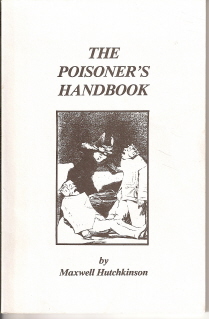
From just before the holidays, an old tale from Maxwell Hutchkinson’s The Poisoner’s Handbook (printed by the defunct American publisher of notoriously repugnant crap, Loompanics) built around a bit of fact about rosary peas, inconvenienced a tourist attraction in Cornwall, England, called the Eden Project. Bad publicity and embarrassment was the immediate symptom, as it always is with anything even remotely connected to America’s special brand of paranoid underground literature on how to strike your enemies down and overthrow the government.
An alert has gone out for the recall of thousands of beaded bracelets sold in tourist attractions after it emerged they are made from a highly toxic seed.
The Eden Project in Cornwall, which sold 2,800 in a year, is one of 36 retailers urging customers to return the red and black wrist charms.
They are made from the Jequirity bean – a deadly seed of the plant abrus precatorious which contains the toxin abrin, a controlled substance under the Terrorism Act.
Rosary peas have been around forever. And despite fear in the US and UK security apparati, they have inconveniently declined to kill anyone in the last decade. Even though they are routinely sold on eBay.
However, because of The Poisoner’s Handbook, rosary peas — and the small amount of abrin inside their very hard shell, have been treated like castor seeds.
In other words: Ahhhhh, danger!
The Daily Mail reported that the Eden Project had been selling the wristlets made of jequirity beans for a year. With no known intoxications.
Now, if readers turn to page 8 in The Poisoner’s Handbook:
The phytotoxin from precatory beans, also known as jequirity beans, is very similar to ricin and and the extraction process listed … may be used for both …
Some years ago, a few very stupid people came up with the idea of using the attractive scarlet and sable beans for rosary beads …
If your target is strongly religious, then these beads can be easily modified to kill.
Obtain, if possible, some acupuncture needles or grind down regular needles as thin as possible while still being strong enough to puncture the jequirity bean coating. Wearing leather gloves, very carefully about a dozen minute holes in each bean on a rosary. When you are finished, spray the string of beads with DMSO … which will dissolve and carry the abrin, and allow to dry.
As the abrin slowly kills your target, an interesting cycle will begin; the worse your target gets, the more he will pray with his rosary beads, which will only make him worse, etc.
These items make wonderful presents for the more religious target.
We’d send one to the Pope, but he already has nineteen hundred years of Christian spoils to adorn himself with.
Marvelous stuff, that.
Keep in mind that the only stupid people here are those who believe anything in Hutchkinson’s book, having secured it or copies of its ‘information’ for edification and/or training. And over the years there have been hundreds, even tens of thousands of such people, many — surprisingly — in government and national security work.
As with ricin, which is listed next in this thin volume, one sees the obsession — carried into the neo-Nazi/survivalist far right — with the idiotic idea that dimethyl sulfoxide can make ricin, and by extension — abrin from rosary peas, into a contact poison.
Which is rubbish.
Hutchkinson’s book was turned into digital copy and distributed in anarchy files on underground bulletin board systems in the US. They were part of what was considered a forbidden lore. In that world, having access to it meant you were special and clever, when — in reality — just the opposite, you were a fucked-up anti-social dullard, was a more accurate assessment.
Later, these files were migrated to the Internet.
In this way Hutchkinson’s poison book, torn into fragments, traveled around the world. Eventually, its poison recipes also found their way into al Qaeda/jihadi documents, just in time for the War on Terror.
If you’re found with recipes from the book in the US, along with a few castor seeds or, perhaps, the makings of a silencer or pipe bomb, they’re part of the evidence that will send you to the pen.
In England, jihadi documents containing items bowdlerized from Hutchkinson’s notes are treated as things deemed likely to be of use in terrorism. As such, they’re considered seditious and, again, if you’re caught in the wrong circumstances or religion, enough to have you imprisoned.
“In Trinidad in the West Indies the brightly coloured seeds are strung into bracelets and worn around the wrist or ankle to ward off jumbies or evil spirits,” reads the Daily Mail newspaper.
Here’s a kook summary for the end of the year, all brought on by the wide publicizing of Newt Gingrich’s love for electromagnetic pulse doom mythology. I correctly called Gingrich’s bubble about to burst a week ago. His mania for electromagnetic pulse doom stories proved unpalatable, along with many other things, to many.
However, Gingrich will always have the EMPAct America yearly conference at Niagara Falls. (Joke: You’ve won first prize in a travel lottery — a weekend in Niagara Falls! Second prize is a week in Niagara Falls!)
From the wires, on electromagnetic pulses ending civilization, still echoing from the examination of Gingrich’s personal fancy:
Apocalypse 2012 — an obscure author who specializes in the end-times/survivalism fringe market, curses US politicians for not doing enough to save us from a coronal mass ejection.
“If [EMP doom] sounds far fetched, then you haven’t spoken to Lawrence Joseph, a Los Angeles-based writer who has spent much of his life preaching this frighteningly plausible vision of the Apocalypse,” it reads.
“As only politicians can, they dashed the hopes of a healthy civilization,” the man told CTV News.
Written by one of EMPAct America’s lobbyists, the article is distraught over the New York Times piece on Gingrich and EMP doom.
The Russian newspaper, Pravda, has delivered us a warning, one to heed:
[If] the U.S. continues in its attempts to fight terrorists and provide support to our NATO partners, we will “provoke” an EMP attack that will kill many millions, potentially end civilization as we know it, and ultimately result in the loss of our sovereignty. This warning is not the first to have emanated from Russia. One of the most notable was described in testimony before a House Armed Services Committee Hearing held on July 22, 2004—a high-level Russian official (Chairman of the International Affairs Committee) had issued a similar threat to two sitting Congressmen while discussing U.S. involvement in the former Yugoslavia.
The Russians are not alone. An EMP attack against the United States has been written about and discussed openly within China, North Korea, and Iran …
“It is therefore baffling that the New York Times would take an obviously partisan stance to a major threat,” it continues.
Cryptome publishes a notice in the Federal Register on a meeting to be held on January 9 by the Department of Homeland Security’s Advisory Committee. Public comments on threats delivered to the Committee to be published later at regulations.gov.
Sensitive Threat Briefings against the Homeland.
Briefing on Strategic Implementation Plan to Counter Violent
Extremism Domestically.
Update on Border Security and Evolving Threats.
US Coast Guard, Update on Counterterrorism Efforts Around the
World.
TSA Frequent Travelers Program Operational Update.
Electromagnetic Pulse (EMP) Threat–Lessons Learned and Areas of
Vulnerability, and
Evolving Threats in Cyber Security.
Basis for Closure: In accordance with Section 10(d) of the Federal
Advisory Committee Act, it has been determined that the meeting
requires closure as the premature disclosure of the information would
not be in the public interest.
Alert readers will have noticed that DHS threat analysis can be moved by newsmedia subject matter — even when there is no actual threat imminent menace at the root of such stories.
That is, if enough people are talking about electromagnetic pulse doom, even though the net result has been skepticism and damage to a presidential political campaign, homeland security is moved to be briefed on the notional matter.
Also worth consideration: Briefing on Strategic Implementation Plan to Counter Violent Extremism Domestically.
Generally speaking, there was no violent domestic extremism in 2011 unless one counts the Giffords shooting. And Occupy Wall Street is not armed.
In fact, the FBI’s end of year list of top ten terror cases is a paltry one, domestically consisting only a people nabbed in a variety of wanna-be plots uncovered by the loose chatter of those arrested.
Coincidentally, and earlier this this month, DD blog has posted extensively on the extremism and heavily armed survivalists associated with the Cult of Electromagnetic Pulse Crazy.
The script: The US will collapse soon, through an unspecified series of disasters which include (but are not limited to) total electrical grid failure, rampant bioterrorist-spread disease, and the death of money. Only those in the country, on farms with their own fruit trees, vegetable crops, chainsaws for cutting firewood, elevated water supply, and Bible-reading skills will survive. You will have to defend yourself from the hordes fleeing the cities, just like in AMC’s The Walking Dead.
You must view all three Urban Danger teasers to get the full bit. (I jumped on the grenades so you don’t have to.) But watching the one posted, if you can endure it, delivers the general idea. There ain’t no progressives in this bunch. Or children and other young people, it would appear.
This old white Christian paranoid End Times mania is inseparable from the electromagnetic pulse attack story. And the political professional EMP lobby has always nourished it.
These days it’s virtually mainstream due to adoption by significant segments of the country’s dysfunctional and increasingly irrational political class.
Number 2 on the FBI list of top stories/arrests in terrorism/violent extremism.
More on the Alex Jones-like cult devotion to Ron Paul in 2011 tunes written for and about him. No one else, not even pop star celebrities, comes close. The best exude sly bits of humor in the lyrics, a rare commodity in the Paul legion. It’s a demographic so sincere in belief its default position is always closer to the dour than the joyful. Paul’s apocalyptic predictions of what will happen to the country also draw survivalists and end-timers. Like him, they strongly value the hoarding of precious metals and the building of bunkers.
This lady name checks “Aden-hauer” [sic] and Charles de Gaulle!
An tongue-in-cheek almost perfect adaptation of the old classic, “Downtown.”
Lyrics:
Ron Paul, he’s really not that old
Ron Paul, he’d rather pay with gold
Ron Paul, he’ll open up the fed
Ron Paul, drinkin’ raw milk in bed
This young fellah is trying out a poor man’s Woody Guthrie/Pete Seeger/Hank Williams soft sell approach. I like it.
Horribly unappreciated at 40-some views. If you sent them 10 dollars for every view it still wouldn’t pay for the love and money they’ve put into the Paul campaign.
Even death metal bands with Cookie Monster vocalists love the Constitution and sound money.
Lyric:
“When they’re talkin’ shit about Ron Paul, they’re walkin’ on the fightin’ side of me/I would suggest they shut their trap before they lose all their teeth …”
This appears absolutely true.
This is an adaptation of a Scottish fighting/dancing tune but, for the life of me, I can’t recall the title now. Check back later.
“I bet there is nobody singing about that douchebag Newt Gingrich,” writes one commenter under one of the many places it’s been uploaded to YouTube.
A rootsy hippie-ish folk lilt. Right now there’s probably someone singing something like this at a coffee house open mike near you. And I bet they’re mentioning freedom, liberty and something bad happening to the Fed. Go check, I’ll wait.
In addition to the threats, Iran has started a 10-day naval exercise to demonstrate what it calls “asymmetrical warfare,??? a military doctrine aimed at defeating U.S. aircraft carriers in a potential Persian Gulf conflict by using swarms of rocket-mounted speedboats and a barrage of missiles.
DD blog gamed it, as part of a larger thing which included going after the Iranian nuclear program, in 2007.
“The Switchblade is a pretty cool piece of kit, it is a nice culmination of technologies … that have come to the fore for very small but lethal technology,” says the man in the video.
You can’t satirize the US national security business.