Featured prominently on Google News, which was probably paid to display it, here are the great quotes:
How small can air-to-ground weapons get? Air Force officials are publicly suggesting the development of 1-pound munitions that could kill an individual in a crowded area without harming innocents standing nearby.
So, guys, you go stand right next to the wooden target on the test range, then. Any takers? Thought not.
[The small flying cluster bomb/anti-tank mine] spins like a maple seed as it descends, scanning the area for its targets using laser and infrared sensors.
Like a maple seed. I bet the p.r. person at Textron who came up with that description got a raise.
The 9-foot torpedo, petite enough to be carried by unmanned submarines and drone helicopters, is currently under development at Penn State University, in association with the Naval Undersea Warfare Center.
Petite. A 9-foot torpedo is petite. Who could write such s—? Someone not to be invited over for drinks and barbecue, that’s for sure.
Now, if you know some androids who throw parties where they eat bags of arsenic and roofing nails for kicks …
The work of that segment of the economy unhurt by the Great Recession. If you were in the business of making petite torpedoes and anti-tank mines that spin like maple seeds, things have been great.
As the recession shook Americans’ confidence last year, new figures show that weddings for people 18 and older dropped to the lowest point in over a hundred years.
A broad array of new Census Bureau data released Tuesday documents the far-reaching impact of a business slump that experts say technically ended in June 2009: a surging demand for food stamps, considerably fewer homeowners and people doubling up in housing to save money.
The government revealed that the income gap between the richest and poorest Americans grew last year by the largest margin ever, stark evidence of the impact the long recession starting in 2007 has had in upending lives and putting the young at greater risk.
The top-earning 20 percent of Americans — those making more than $100,000 each year — received 49.4 percent of all income generated in the U.S., compared with the 3.4 percent earned by the bottom 20 percent of wage-earners who fell below the poverty line, according to the newly released Census figures.
A different measure, the international Gini index, found U.S. income inequality at its highest level since the Census Bureau began tracking household income in 1967. The U.S. also has the greatest disparity among Western industrialized nations.
Three states — New York, Connecticut and Texas — and the District of Columbia had the largest gaps in rich and poor, disparities that exceeded the national average. Similar income gaps were evident in large cities such as New York, Miami, Los Angeles, Boston and Atlanta, home to both highly paid financial and high-tech jobs as well as clusters of poorer immigrant and minority residents. — AP
But do go to the site of the German researcher propagating its central thesis, Ralph Langner.
Langner’s discussion is an interesting one and often compelling.
But “hack of the century” is the type of overused phrase that won’t get you a lot of mileage in circles not inclined to believe absolutely everything published about global malware. Or cyberwar.
Langner knows the technical side and makes a reasonable argument
as to the amount of effort put into the Stuxnet bug. He argues that it was created by a national intelligence/defense program. And the obvious insinuation for this story is Israel, although other countries are not ruled out.
However, the discussion goes a bit to far — understandably, in linking circumstantial news — that Iran’s nuclear program has progressed slower than expected — and Stuxnet.
There is no proof that anything went bang or failed catastrophically in a nuclear reactor or even a a centrifuge cascade. Other equally or more plausible explanations exist for any perceived slow down, if there is one, in an Iranian nuclear weapons program.
Still, if one takes the broad leap and grants that a virtual effect of some kind was achieved, Stuxnet still has had an indiscernible effect to everyone not already in on the story.
Years ago, I said publicly that I thought governments would try to write malware and pursue cyberwar. I had no real idea how long ago until I started digging up some old digital news records.
“George Smith is skeptical that offensive military operations will work very well in cyberspace.
“For years, Mr. Smith has been writing a newsletter on computer break-ins . . . He says Pentagon officials are overstating the danger from computer hackers and intruders.
“Nevertheless, [Smith] expects the United States and many other nations to try to create ‘cyber-attack’ forces: ‘I think it is likely that people will try, I think it is unlikely they will have any impact.’
“Mr. Smith says armies in Bosnia and the Gulf War faced computer problems, including viruses. He says they coped with them in much the same way they coped with flat tires on vehicles, or worn out parts on aircraft.
“[Smith] said] the idea that small groups of people, armed only with keyboards, could seriously hurt a powerful military force belongs in Hollywood — not the battlefield.”
To this I’d only add that the lack of substantial proof of success in offensive malware operations won’t stop anyone in the business of insisting just the opposite.
However, Iran’s nuclear program also won’t be stopped by a piece of malware aimed at controller software in its factories.
And the liabilities of employing something like Stuxnet are now fairly obvious.
The most glaring being that such a thing is immediately seized upon and pulled apart by the worldwide distributed network of computer security researchers. And second, that even granting for a moment that it was designed to be directed at Iran, the intelligence requirements for it to be solely limited to that were still way too great to limit its spread to that country.
Stuxnet, which was first publicly identified several months ago, is aimed solely at industrial equipment made by Siemens that controls oil pipelines, electric utilities, nuclear facilities and other large industrial sites. While it is not clear that Iran was the main target — the infection has also been reported in Indonesia, Pakistan, India and elsewhere — a disproportionate number of computers inside Iran appear to have been struck, according to reports by computer security monitors.
Another ramification is the identification of the ioriginating country. If the country of origin is already an international pariah, then it doesn’t matter if Stuxnet is pinned on such a nation.
As a thought experiment, assume for a minute that Stuxnet is a part of a US program, not Israel’s.
In terms of national security and unilateral action, everyone already thinks the US acts rashly and can be reliably depended upon to behave with little regard for others.
At this point, there’s no longer much of a downside to using something like Stuxnet.
Even if a national program were to execute something so poorly the backfire would sweep over the originating country’s civilian systems. (That’s certainly progress, of sorts.)
It would just be yet another example of some team or some agency thinking, perhaps reasonably, that it’s godly and beyond reach.
And we’ve already had a few of those.
Bruce Ivins and the lack of professional diligence at Fort Detrick, in the world of real things as opposed to virtual, coming to mind.
Stuxnet as a super cyber weapon is a hot, sexy story. The hype behind it is predictable, even logical. Paradoxically, one of the famous journalists usually the first to exaggerate such things — John Markoff of the New York Times — gave it, what was for him, a mild reception.
The most striking aspect of the fast-spreading malicious computer program — which has turned up in industrial programs around the world and which Iran said had appeared in the computers of workers in its nuclear project — may not have been how sophisticated it was, but rather how sloppy its creators were in letting a specifically aimed attack scatter randomly around the globe.
All of the old anti-virus programmers, as far back as the late Eighties and Nineties, would have told anyone the same. In fact, they told stories like it about various computer viruses many times, the only difference being the wherewithal didn’t yet exist to aim them roughly over a global network.
In essence, once a piece of replicating malware is released into the world, no matter how “smart” (that being a relatively elastic term) its creator(s), it’s effectively liable to wind up where least expected, no matter how exactingly programmed.
If we get back to nuclear fuel cycles and national bomb programs for a moment, it should be remembered that uranium can be enriched, and an atom bomb made, entirely without the use of Siemens software and globally networked computers.
Entire libraries of books exist on the matter.
And people who have devoted professional careers to the study of nuclear proliferation can give entire classes on what can go wrong inside a bomb program. Without ever getting to software problems and malware. There are many things in the material world which can effect the progress of a bomb-making program, not the least of which are easily understood hurdles like inexperience, subpar skills and interference with access to essentials and properly engineered machinery.
It is unclear whether the problems that Iran has had enriching uranium are the result of poor centrifuge design, difficulty obtaining components or accelerated Western efforts to sabotage the nuclear program …
For most of this year, Iran has added relatively few centrifuges — the machines that spin uranium at supersonic speed, enriching it — to its main plant at Natanz. Only about half of those installed are operating, according to the International Atomic Energy Agency. So far, Iran has produced about 5,730 pounds, enough, with considerable additional enrichment, to produce roughly two weapons.
The public explanation by American officials is that the centrifuges are inefficient and subject to regular breakdowns. And while Iranian officials have talked about installing more advanced models that would be more efficient and reliable, only a few have been installed.
“Either they don’t have the machines, or they have real questions about their technical competence,??? Mr. Samore said.
Some of Iran’s enrichment problems appear to have external origins. Sanctions have made it more difficult for Iran to obtain precision parts and specialty metals.
Any of these explanations are as likely, perhaps even greatly moreso, than Stuxnet.
I was recently at a Washington Nationals baseball game. While waiting for a hot dog, I overheard the conversation behind me. A management consultant for a big national firm was telling his colleagues that his job was to “market products to the Department of Homeland Security.??? I thought to myself: “Oh, my! Inventing studies about terrorist threats and selling them to the U.S. government, is that an industry now????
We’re out of balance — the balance between security and prosperity. We need to be in a race with China, not just Al Qaeda. Let’s start with electric cars.
Anyway, Friedman needs a pat on the back. He was one of the pundits who contributed to the private sector security industry boom after 9/11.
Specifically, in touting the Iraq War and letting us all know that every once in a while the US had to smash a country in the Middle East for the sake of sending the message: Suck on this!”
And ever since the country has had a booming business infrastructure for finding various new and old menaces, even if they either don’t or barely exist.
If this is actually news to Friedman, and not a failed joke, it’s because he’s spent his time marveling at the above-ground plastic mine business in China. Among other wonderful things.
In today’s Los Angeles Times, semi-related news came from a business story on Northrop firing 500 by the end of the year.
One of the few sectors of the economy where jobs have been very durable during the Great Recession has been national security. A 500 person lay-off at Northrop does not so much show that it has had an equal effect on defense. But rather that the scale of the collapse of the economy for the middle class and the subsequent debt the government has taken on are finally causing relatively minor cutbacks — with respect to the rest of the country — in that sector.
The cutbacks are the latest to hit the aerospace industry amid concerns about the ballooning deficit.
After growing by double digits every year since the 2001 terrorist attacks, defense spending is expected to rise only about 1 percent annually over the next five years …
Lockheed Martin Corp., the nation’s largest defense contractor said earlier this month that about 25 percent of its executives opted for a voluntary retirement program to cut costs as defense spending slows. More than 600 vice presidents and directors applied …
Six hundred vice presidents and directors. That’s nice.
In blog related news, even the Marines get bedbugs. They are so without pity.
Throw the bedbug plague in with all the other signs of national decay. With transience in housing now part of the national structure due to the Great Recession, it’s provided bedbugs with a superhighway to new digs everywhere.
The things crawl in
The things crawl out
The bedbugs prance across your snout
The neighbors have all come and gone
But something else is always home
Spray some Raid around the bed
So to bedbugs you are not fed
Bedbugs are always free!
Ha-ha-ha-ha-ha
Spray some Raid on your nightshirt
It looks better than bedbug dirt
If you detect a sudden itch
There’s always more, it’s just a —–
If you tell of bedbug bite
No friends or presents will come at night
Bedbugs tell of social justice
There ain’t none
The usual laugh-out-loud Yahoo/Investopedia article on Hot Jobs!
Number one on Monster: Lawyers need more secretaries and process workers!
Number two: And the best paying, jobs in the financial sector, the people who caused the mess but who have also benefited the most greatly from it. They can buy the $180 harmonica and the 99 cent Harmonica app for their iPhones!
At the bottom, with the poorest wages: Bed pan technicians, people to clear away the tubes and waste in hospitals, job security for those who hook up the oxygen and insert thermometers in the anus. Even though the work is hard and takes dedication, it’s not well compensated. If the person you’re married to has a job in it, too, you can probably get by. Or else it’s four or five buddies in the one or two bedroom apartment.
Other booming job opportunities: Engineers for making flying robot assassins, executives for selling arms to nations in the Middle East, border patrol — sadly, the latter pays the least.
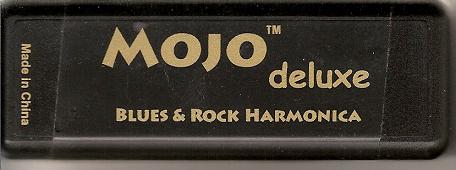
Readers know my mojo-free Mojo Deluxe blues & rock harmonica, made in China by slave labor for pasting to a cheap paperback instruction manual, is my metaphor for deindustrialization and major fail in this country.
Historically, the blues harmonica was made to be a cheap instrument, something anyone could afford, pick up and play a few tunes on. There is no justification for a “blues & rock” harmonica to be made in China, for a couple dimes, so it can be sold in the US.
The harmonica, by nature, was already cheap!
The Mojo Deluxe is such a good metaphor because it matched with the outsourcing of the US guitar industry, written about here two years ago.
It was described thusly, using the American brand Fender:
Turning back to the category of electric rock instrumentation, the all-encompassing history of Fender, “The Soul of Tone: Celebrating 60 Years of Fender Amps,” has something to say about American companies and the Chinese slave labor workforce.
Fender is THE American brand name in electric guitar amplifier. We’re going to skip rehashing most of its history in which it rose to prominence as a vendor of classic designs and then almost went completely out of business. Instead, we fast forward to today when Fender offers a dominating and broad line of electric guitar amplifiers, equalled only by Marshall and two other big American manufacturers, Peavey and Mesa Engineering. Because Fender offers a broad line, some of its amps are made in China.
Paradoxically, the book indicates Fender would rather not make inexpenive junk amplifiers for the dilettante. However, because of realities in the market, it must.
“In the old days, you walked into a music store and took whatever you could get your hands on,” says Fender’s Shane Nicholas to author Tom Wheeler.
“But over time, people have become much more demanding. They expect a lot of features at low prices…”
“There are a whole lot of inexpensive Chinese amps out there, and many of them offer plenty of features. We need to compete with that … anybody who makes a small entry-level amp has gone to Asia.”
Nicholas describes the cheap Fender Frontman amp as formerly being made in Mexico: “… and every dealer loves it and they’re all making money with it, and then a year later the same dealers say, “Hey, that’s too expensive!”
And it had become “too expensive” because it had been undercut by another western brand which has moved its manufacturing to China, making something similar but even cheaper. And Fender was compelled to move the amp’s manufacture to the same country.
Fender, like many other American companies, deserves condemning for the rationalization.
The company ceded its America-made brand for the everyman for essentially a glorified boutique shop, making custom guitars and craftsman instruments only for the wealthy or those few with major label contracts. It’s probably fair to say that not everyone who now works at Fender can afford to regularly buy the company’s select US-made goods unless they get a good employee discount.
They can, as an alternative, purchase the Chinese-made Fender-branded stuff.
And over the years DD has run into many musicians who marvel at their 99-dollar Chinese-made purchases without wondering why it is they can’t afford the US made good anymore. They give no real consideration to how their day job wages have either stagnated or been compressed.
And they don’t see any illogic in yakking about how they’ve upgraded the slave labor instrument with $100 dollars in replacement parts, also mostly made in China.
Which brings us back to harmonicas and the US model of “reindustrialization.” In this case, the revival of manufacturing on a very limited base, one which makes only boutique goods.
The only US manufacturer of harmonicas is a company called Harrison.
In Rockford, Illinois, its facility is in a small part of the old Ingersoll machine tools manufacturing plant. Ingersoll was an American brand name, too. And because of US deindustrialization and slave labor in non-democratic Asian countries, it blew away in the wind. And unemployment in Rockford is devastating just like everywhere else.
The story of Harrison Harmonicas is well told in a clip from the BBC here.
It’s full of cognitive dissonance but does effectively get across the toll of deindustrialization in the heartland.
One can only marvel at the paradox of an instrument, which was — by nature — to be made cheaply, being designed on a super-expensive 3-D manufacturing machine.
A small one limited to, once again, the dilettante with money to burn, those who haven’t yet maxed out their credit cards, some pro musicians. In the plutonomy, you can have a consumer product manufacturing base, as long as its restricted to boutique stuff for the haves.
Certainly, when DD was regularly playing the dive bars in the old Lehigh Valley, a place very much victimized by deindustrialization, those who played harmonica would have had to think long and hard about whether they wished to spend 180 dollars for an instrument.
This does not, per se, reflect poorly on a company like Harrison Harmonicas. But it is to say they are not replacements for an America that makes things. And no matter how many of these businesses you now see profiled in news stories, they do not provide significant employment opportunities for average Americans. They do not replace the old Ingersolls or Bethlehem Steels.
They are, instead, a result of the ruinous path we’ve taken. One that puts you in the national blind alley of modern Swiss watch-making, high-end manufacturing making patently over-engineered and needlessly high tech things — extravagances, status symbols and frou-frou goods which can be pitched to the haves.
As for slave labor Mojo Deluxe blues & rock harmonicas?
They never really took off. The shopping cart link for them on the harmonica book author’s website is dead two years after it hit the market.
If you want one badly enough, you can still buy it on Amazon.
Wait long enough and there’ll be some be-a-bluesman app for your iPhone. You won’t have to play the Fender Strat or Mojo Deluxe at all.
Nb: There was probably no success in store for the Mojo Deluxe because another American-named company was already marketing a slave-labor harmonica set, LoDuca.
Good news, lads ! Good news! The Mojo Deluxe starred in the video but was not actually played for it!
Sunday wouldn’t be complete without Tom Friedman going on about the latest miraculous thing he’s discovered in China.
His examples this month are all obviously built on a trip to some sales convention there, an event where he’s discovered a few American carpet-baggers who’ve taken their money offshore for manufacturing.
This week it’s Kevin Czinger of Coda, a Santa Monica-based business that’s bringing a Chinese-made electric sedan that costs $45,000 — half the price of Elon Musk’s electric car for the super-rich — to California.
In DD’s video of Friedman getting pied set to China Toilet Blooz 2.0 , Friedman’s quote about Chinese wonderfulness being another “Sputnik” moment was featured.
China is doing moon shots. Yes, that’s plural. When I say “moon shots??? I mean big, multibillion-dollar, 25-year-horizon, game-changing investments.
Naturally, what’s not in this column is that there may not actually be a market for a $45,000 electric sedan, Chinese made, one that goes only 100 miles and requires six hours to charge, in America. Except for dilettantes and the wealthy. (There may, indeed, be a few thousand of those.)
Or that there may be some resistance to the idea of buying a Chinese car, considering the experience Americans already have with faulty products made over there.
There’s a bit more critical piece on the Coda here.
And Friedman naturally does not mention that there are no Chinese-workers making the sedan part who can afford them.
Or that rebates and tax rewards from the US government and the state of California, aimed at providing incentive for buying Codas, outwardly seems to guarantee that a significant portion of the taxpayer money may go to China for the sake of the man’s business venture.
Ted Nugent’s latest essay in the Washington Times is the third in a series of anti-Muslim rants he’s penned this summer. Bafflingly, some of these are now being reprinted in a Detroit newspaper.
Nugent endorses the Team B report that Muslim extremism, in the guise of Shariah law, is taking over America. Indeed, if so, it is nefariously subtle, since most cannot see it.
In the fact-based world, Nugent’s essay — as does the Team B report — takes on the air of something heard from General Jack Ripper, telling Lionel Mandrake at Burpelson AFB, why he launched the bomb wing at the Soviet Union.
Nugent uses the word “poisoning” twice in his essay. It’s a less elegant construction than Ripper’s dialog, concocted by Terry Southern and Peter George for the script of Dr. Strangelove:
A foreign substance is introduced into the precious bodily fluids, without the knowledge of the individual and certainly without any free choice. That’s the way the commies work…
In Team B’s case (and for Nugent’s essay), the nefarious foreign substance is Shariah law, not fluoride put into ice cream by the commies.
“What if it turns out that some of the people the Obama administration has been embracing are actually promoting the same totalitarian ideology and seditious agenda as al Qaeda, only they’re doing it from White House Iftar dinners?” is the stand-out quote from Team B.
In Dr. Strangelove, Jack Ripper was the plainly nuts character.
The most bone-chilling finding by Team B is that America faces the threat of Islamic Shariah law slowing poisoning our legal system and ultimately destroying it.
He continues:
Shariah should be banned in the United States and those Muslims and imams in America who advocate Shariah should be charged with sedition. Trying to overthrow our constitutional government through peaceful or violent means should never be tolerated.
Shariah will only be allowed to poison our legal system and culture if we allow it.
This from a guy who only shouts and writes about overthrowing the present US government.
Team B is the work of Frank Gaffney. Earlier this week, I wrote about him in connection with a post on the Cult of EMP Crazy, of which he is a charter member.
He represents the core of the Cult — the sole property of the GOP — also sharing double membership with Islam-o-phobes and those who believe the President is a secret Muslim.
You can think of them as a lamentable collection of poor men’s Jack Rippers. They hold political office or seats in insane right-wing think tanks but do not have command of a strategic bomb wing.
Yet.
The only reason they’re not truly dangerous right this instant is because they don’t have majority power.
Hoekstra is famous for being mostly a loud Congressional do-nothing. And an Islam-o-phobe. I wrote about him back in 2006, when he was first venting rubbish on Islam sapping and impurifying the precious bodily fluids of America.
As with the Tea Party, Nugent has adopted ever more extreme positions. These ideas are not new, having always been present in the US politics. However, in gentler times they were easily suppressed and kept to the fringe.
Now they’ve been vetted as acceptable by large sections of the population. They anticipate and welcome an even more harsh and cruel country, one of great social and economic inequality, intolerant of everything except its paranoid white appendix of wealth and power.
The Dickensian characters of Eat Shit Farms appeared in this short news video from the Associated Press:
Everyone is familiar with the image of the American businessman who now invokes his 5th Amendment right to protection against self-incrimination.
Then there was the Austin “Jack Decoster/Peter DeCoster team from Eat Shit Farms Wright County Egg, the business at the center of the biggest spread of foodborne salmonellosis in US history.
Their written testimony, here, is predictably self-serving.
Their business grew too fast. And it’s always been aggressively fighting Salmonella. Et cetera.
Pictures from the FDA are worth a bit, showing sides of Eat Shit Farms’ hen house broken and bulged out from piles of crap, liquid excrement seeping from various holes and cracks, and dead flies everywhere.
Bart Stupak, the outgoing Michigan congressman and chairman of the House Energy & Commerce committee, was the face attached to the investigation.
Stupak, an anile character known only for trying to screw up healthcare reform and living in the shady place now known as the C Street house, released as pro formaa statement of concern and rectitude as possible.
Congressman Bart Stupak was alarmed. He was on the case. There were flies and manure everywhere. It probably took a staffer all of an hour and a half to write and put into .pdf form.
That Bart Stupak was head of this congressional investigation reveals a lot about how much change is coming.
Stupak mentions other hearings he’s conducted on foodborne illness, as if he can take credit. Too bad for Bart Stupak, the same types of things continued to happen. Indicating Stupak does things for show and publicity.
These are meant as indictments of the firms named on the certificates. As well as what it takes to get some rubber stamp for good healthy business.
They also serve as indictments of the US government and congress which, two years after Peanut Corporation of American set off a salmonellosis outbreak that killed nine, still wasn’t regulating or overseeing anything until it was too late again.