The hype about trade war is unjustified — and, anyway, there are worse things than trade conflict. In a time of mass unemployment, made worse by China’s predatory currency policy, the possibility of a few new tariffs should be way down on our list of worries.
For the truth is that U.S. policy makers have been incredibly, infuriatingly passive in the face of China’s bad behavior — especially because taking on China is one of the few policy options for tackling unemployment available to the Obama administration, given Republican obstructionism on everything else. The Levin bill probably won’t change that passivity. But it will, at least, start to build a fire under policy makers, bringing us closer to the day when, at long last, they are ready to act.
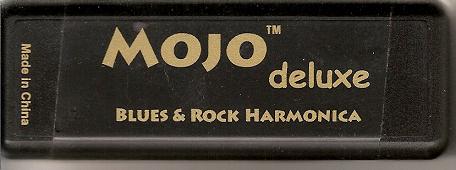
Good news, lads! Good news! At least we killed the Mojo Deluxe Blues & Rock harmonica. 400 views and counting. Onward and upward!
The new Guitar Center shopper arrived in the mail this week.
I get them regularly. Three years ago the thing was filled with offers indulging the stupid dilettante with money — boutique goods made by US brand manufacturers who had outsourced their everyman stuff to China. (Or maybe not so stupid person investing in a piece of ugly furniture they believe will appreciate significantly in value simply because it is ostentatious, rare and preposterous. Unlike off-shored guitars, which never gain in value, winding up at pawnshops and worth less than a case of decent beer to the seller.)
But lately the shopper has taken on a bit of a desperate quality.
Which brings us to the extreme high-end of the American custom market, where often mediocre instruments attain intelligence-insulting pricing, indicating the total extinction of common sense and the middle class.
American relic guitar luthiers could give Eddie van Halen a precise replica of his 1977 axe, complete with cigarette burn marks, ugly sticky tape, lousy but freakishly unique paint job and power drill holes.
In the Summer edition of DD’s Guitar Center catalog it is said, “Ed has partnered with Fender to bring you the Edward van Halen Frankenstein replica guitar — a faithful reproduction of one of the world’s most recognizable instruments. The red, black and white body … has been put through an aging process to replicate the original, down to every last scratch, ding and cigarette burn.”
List price: $25,000.
New guitars allegedly “worth” $25,000 dollars are never played where other people hear them. And DD never wants to meet someone who would pay such money. Neither does he wish to meet scary Eddie van Halen, who probably wouldn’t have even paid one thousand dollars in the late-Seventies for any electric guitar.
Instead of saving to send your layabout parasite of a kid to college, get a Gibson Jimmy Page Doubleneck relic reissue, cheap at $8,000. Or splurge for a Paul Reed Smith Doubleneck Dragon, $32,000. You know you deserve it.
Outside of these extravagances, almost all the merchandise in Guitar Center was either made in China or Indonesia.
Consider that for a moment.
The business of rock ‘n’ roll instrumentation was built on a foundation of American made guitars and amplifiers. Period.
Essentially, all the brand American companies — if they didn’t go out of business — turned themselves into custom shops for the high end. Except for the company that was always a custom shop for the high end — Mesa Engineering.
Can you believe the odious craftsmen at Fender responsible for the $25,000 Eddie van Halen guitar were actually revered a couple years ago? It tells you all you need to know about economics in present day America.
However, in the October 2010 Guitar Center shopper, almost all the goods shown are made by slave labor in China.
You have your Epiphone Guitars, used-to-be American factory made, now down market Gibsons made in China. (Sometimes Korea, a few years ago.)
You have your $119 Fender “Strat” — made you know where. Fender amplifiers, all made in China, except for one tube model at the high end of the range.
One could go on and on, page after page after page of stuff invented here for middle class Americans, made by middle class Americans, now all gone to China.
Paradoxically, the shopper features an interview with country music mega-star Keith Urban. Urban chats about his collection of vintage US-made guitars and amplifiers. Some of them were lost in the Nashville flood, he says.
It’s a pity. The cognitive dissonance.
Guitar Center employees, who are all rock musicians, probably make a little above minimum wage plus commissions.
What they think about working amidst the $4000 custom Gibson Les Pauls (plus the $9000 Gibson double-neck, the $4000 Gibson jumbo acoustic, and the $1200 Fender P-Bass) they can’t afford is unknown.
One wonders, for a moment, what the worker discounts are like.
From today’s business section:
In one of their final actions before returning to the campaign in their districts, members of House voted 348 to 79, with dozens of Republicans joining in support, for a bill that would open the way for the US to slap tariffs on Chinese goods … But the bill faces an uncertain future in the Senate …
But major business groups representing a diverse array of trades — including cattle ranchers, Los Angeles freight forwarders and Wall Street firms — lined up against the bill, saying it would do more harm than good for economic growth and job creation.
Turning back the clock is impossible. But smashing Fender and Gibson’s Chinese-made imports with tariffs would be a very good thing, if only from the perspective of boosting mental health. It would cause these firms, and their competitors, discomfort. Such discomfort would be great right now, particularly if sending even more things to Asia wouldn’t soothe it, for what were quintessentially US firms which had, long ago, been dedicated to quality musical instruments made by Americans for the same.
Their CEOs might consider banding together with others to go before Congress to lobby for better pay, a living wage for their potential consumers.
I won’t hold my breath waiting for that to happen.
In the front section of the newspaper, defeated by GOP filibuster, a rider on the tax cut legislation: “A bill to punish firms that send US jobs overseas was blocked …”
And on the Opinion page, this gem:
Income inequality [in China] is another major concern [to the Chinese]. Cities and provinces have raised the legal minimum wage. In Guanghzhou, for example, it’s now [$164] a month …
“Marvelous,” as Dirty Harry Clint Eastwood used to say.
Related: The $180 blues harp. Everyman instrument gets upgraded to Swiss watch status symbol.
Readers know my mojo-free Mojo Deluxe blues & rock harmonica, made in China by slave labor for pasting to a cheap paperback instruction manual, is my metaphor for deindustrialization and major fail in this country.
Historically, the blues harmonica was made to be a cheap instrument, something anyone could afford, pick up and play a few tunes on. There is no justification for a “blues & rock” harmonica to be made in China, for a couple dimes, so it can be sold in the US.
The harmonica, by nature, was already cheap!
The Mojo Deluxe is such a good metaphor because it matched with the outsourcing of the US guitar industry, written about here two years ago.
It was described thusly, using the American brand Fender:
Turning back to the category of electric rock instrumentation, the all-encompassing history of Fender, “The Soul of Tone: Celebrating 60 Years of Fender Amps,” has something to say about American companies and the Chinese slave labor workforce.
Fender is THE American brand name in electric guitar amplifier. We’re going to skip rehashing most of its history in which it rose to prominence as a vendor of classic designs and then almost went completely out of business. Instead, we fast forward to today when Fender offers a dominating and broad line of electric guitar amplifiers, equalled only by Marshall and two other big American manufacturers, Peavey and Mesa Engineering. Because Fender offers a broad line, some of its amps are made in China.
Paradoxically, the book indicates Fender would rather not make inexpenive junk amplifiers for the dilettante. However, because of realities in the market, it must.
“In the old days, you walked into a music store and took whatever you could get your hands on,” says Fender’s Shane Nicholas to author Tom Wheeler.
“But over time, people have become much more demanding. They expect a lot of features at low prices…”
“There are a whole lot of inexpensive Chinese amps out there, and many of them offer plenty of features. We need to compete with that … anybody who makes a small entry-level amp has gone to Asia.”
Nicholas describes the cheap Fender Frontman amp as formerly being made in Mexico: “… and every dealer loves it and they’re all making money with it, and then a year later the same dealers say, “Hey, that’s too expensive!”
And it had become “too expensive” because it had been undercut by another western brand which has moved its manufacturing to China, making something similar but even cheaper. And Fender was compelled to move the amp’s manufacture to the same country.
Fender, like many other American companies, deserves condemning for the rationalization.
The company ceded its America-made brand for the everyman for essentially a glorified boutique shop, making custom guitars and craftsman instruments only for the wealthy or those few with major label contracts. It’s probably fair to say that not everyone who now works at Fender can afford to regularly buy the company’s select US-made goods unless they get a good employee discount.
They can, as an alternative, purchase the Chinese-made Fender-branded stuff.
And over the years DD has run into many musicians who marvel at their 99-dollar Chinese-made purchases without wondering why it is they can’t afford the US made good anymore. They give no real consideration to how their day job wages have either stagnated or been compressed.
And they don’t see any illogic in yakking about how they’ve upgraded the slave labor instrument with $100 dollars in replacement parts, also mostly made in China.
Which brings us back to harmonicas and the US model of “reindustrialization.” In this case, the revival of manufacturing on a very limited base, one which makes only boutique goods.
The only US manufacturer of harmonicas is a company called Harrison.
In Rockford, Illinois, its facility is in a small part of the old Ingersoll machine tools manufacturing plant. Ingersoll was an American brand name, too. And because of US deindustrialization and slave labor in non-democratic Asian countries, it blew away in the wind. And unemployment in Rockford is devastating just like everywhere else.
The story of Harrison Harmonicas is well told in a clip from the BBC here.
It’s full of cognitive dissonance but does effectively get across the toll of deindustrialization in the heartland.
One can only marvel at the paradox of an instrument, which was — by nature — to be made cheaply, being designed on a super-expensive 3-D manufacturing machine.
A small one limited to, once again, the dilettante with money to burn, those who haven’t yet maxed out their credit cards, some pro musicians. In the plutonomy, you can have a consumer product manufacturing base, as long as its restricted to boutique stuff for the haves.
Certainly, when DD was regularly playing the dive bars in the old Lehigh Valley, a place very much victimized by deindustrialization, those who played harmonica would have had to think long and hard about whether they wished to spend 180 dollars for an instrument.
This does not, per se, reflect poorly on a company like Harrison Harmonicas. But it is to say they are not replacements for an America that makes things. And no matter how many of these businesses you now see profiled in news stories, they do not provide significant employment opportunities for average Americans. They do not replace the old Ingersolls or Bethlehem Steels.
They are, instead, a result of the ruinous path we’ve taken. One that puts you in the national blind alley of modern Swiss watch-making, high-end manufacturing making patently over-engineered and needlessly high tech things — extravagances, status symbols and frou-frou goods which can be pitched to the haves.
As for slave labor Mojo Deluxe blues & rock harmonicas?
They never really took off. The shopping cart link for them on the harmonica book author’s website is dead two years after it hit the market.
If you want one badly enough, you can still buy it on Amazon.
Wait long enough and there’ll be some be-a-bluesman app for your iPhone. You won’t have to play the Fender Strat or Mojo Deluxe at all.
Nb: There was probably no success in store for the Mojo Deluxe because another American-named company was already marketing a slave-labor harmonica set, LoDuca.
Good news, lads ! Good news! The Mojo Deluxe starred in the video but was not actually played for it!
Sunday wouldn’t be complete without Tom Friedman going on about the latest miraculous thing he’s discovered in China.
His examples this month are all obviously built on a trip to some sales convention there, an event where he’s discovered a few American carpet-baggers who’ve taken their money offshore for manufacturing.
This week it’s Kevin Czinger of Coda, a Santa Monica-based business that’s bringing a Chinese-made electric sedan that costs $45,000 — half the price of Elon Musk’s electric car for the super-rich — to California.
In DD’s video of Friedman getting pied set to China Toilet Blooz 2.0 , Friedman’s quote about Chinese wonderfulness being another “Sputnik” moment was featured.
China is doing moon shots. Yes, that’s plural. When I say “moon shots??? I mean big, multibillion-dollar, 25-year-horizon, game-changing investments.
Naturally, what’s not in this column is that there may not actually be a market for a $45,000 electric sedan, Chinese made, one that goes only 100 miles and requires six hours to charge, in America. Except for dilettantes and the wealthy. (There may, indeed, be a few thousand of those.)
Or that there may be some resistance to the idea of buying a Chinese car, considering the experience Americans already have with faulty products made over there.
There’s a bit more critical piece on the Coda here.
And Friedman naturally does not mention that there are no Chinese-workers making the sedan part who can afford them.
Or that rebates and tax rewards from the US government and the state of California, aimed at providing incentive for buying Codas, outwardly seems to guarantee that a significant portion of the taxpayer money may go to China for the sake of the man’s business venture.
A lot of us have already figured out that beggaring Americans and their jobs for the sake of slave labor and evasion of environment laws and regulation in China has crushed much of the economy for the middle class. And since we have a consumer society, once you have destroyed the buying power of the middle class, put over ten percent of them out of work, and exhausted all their credit, all that they can afford to buy are essentials.
There was, for example, no valid reason for this — the 10 cent Chinese Mojo Deluxe blues and rock harmonica glued to a cheap paperback on how to play harp — to exist in US stores. When made in America, it was already cheap. The only motivation to ship a “blues and rock harmonica”-making operation to China was greed and expedience.
And that was explained here in 2008, in a story on how US guitar manufacturing had been shipped to China and other slave labor countries, the American-made product up-priced for the rich and those fewer and fewer on a major label expense account. While it fired the domestic workforce except for a smaller one seasoned with craftsmen who can make “distressed guitars” for snobs.
It’s easy now to condemn Fender for it. Their executives have explained they didn’t want to do it, but it was the competition … Keep in mind, this was a California company which decades ago featured a significant domestic workforce.
What these groups fail to understand (he’s speaking of a group of 31 lobbyists, including US trade groups and businesses which have recommended the government not do anything about China’s artificially low currency), and what many Americans have failed to grasp, is this: The flood of artificially cheap Chinese goods putting America out of business has merely been a down payment on this country’s present and future unemployment, and higher unemployment means less purchasing power for consumers and less business for retailers over the longer run …
What all these American business groups and corporate executives now doing business with China fail to understand is this: When jobs move to China, Americans are damaged. These days, you don’t have to look far to see the victims.
Robert Reich has been singing a similar tune. He, however, is not really off the hook. This didn’t just go on in Republican administrations.
Navarro, on the other hand, excoriates the Obama administration for not delivering on any of the president’s promises made before election day that he would “crack down on unfair Chinese trade practices …”
But [the consumer society] can’t run on its own because consumers have reached the end of their ropes.
After three decades of flat wages during which almost all the gains of growth have gone to the very top, the middle class no longer has the buying power to keep the economy going. It can’t send more spouses into paid work, can’t work more hours, can’t borrow any more. All the coping mechanisms are exhausted.
Anyone who thinks China will get us out of this fix and make up for the shortfall in demand is blind to reality.
So what’s the answer? Reorganizing the economy to make sure the vast middle class has a larger share of its benefits. Remaking the basic bargain linking pay to per-capita productivity.
Consider Tom Friedman yet again, with quotes from his recent rubbish on “green” plastic-mining in China and how that poor American businessman had to send his work there because he couldn’t get favors here. Skating and slipping on green-whipped creme, dance and shake those arms, Mr. Wonderful!
China Toilet Blooz Reprise
I bought a new toilet
It was made in China
That’s where all the jobs went!
Nothin’ could be finah!
You buy that toilet
It was made in China
Crap in a hole
Crap in a hole
Crap in a hole!
Buy a bag of lime…
It’s the relentless China-is-wonderful gig. Reporting from Tianjin, Tom advises that Chinese are set to beat us again, this time in above-ground “green” plastic-mining.
He finds two sources, one a flack for Chinese innovation, another someone named Mike Biddle, the standard American businessman — this one rationalizing the shipping of most of his work overseas because he just can’t afford enough lobbyists to get Washington to listen to his plan to create plastic mines from discarded computer junk for him. All our fault!
This is Friedman’s brain at work. Meet a flack and a businessman at some economic meeting of the wealthy where he can undertake the job of official ass-sniffer while masquerading as someone sifting through cutting-edge brain power. Then whip out a column on the farting. wisdom emitted.
“China is changing from the factory of the world to the clean-tech laboratory of the world,??? said the flack for Tom. Tom would have said it, but since he had the p.r. person for the “Joint U.S.-China Collaboration on Clean Energy” around …
Last week, Tom told us we all needed to adopt more Confucian values because we aren’t sacrificing enough.
If you Google Tom Friedman and pie you get pages of stuff on the man being pelted with green whipped cream while onstage at Brown in 2008.
Unsurprisingly, almost everyone was rooting for the pie throwers — before and after.
The video is on Youtube in a couple spots. It’s great footage of Friedman slipping about and eventually giving up. If you were a two-time Pulitzer winner, would you have let a couple pies upset you? No! I bet you’d just have smiled, shouted some defiance at the auditorium and continued your speech.
Here’s this blog’s Tom Friedman Blooz, homemade video of the pie incident with a hodgepodge of senseless quote taken from Friedman columns (including today’s) on China. It’s set to the “China Toilet Blooz Reprise,” a Captain Beefheart-styled outro to the original I’ve been flogging.
The Biddle fellow, according to Friedman, is based in California. And he’d keep 250 whole jobs here. But we just don’t have those booming above-ground plastic mines.
China’s plans to vaccinate 100 million children and come a step closer to eradicating measles has set off a popular outcry that highlights widening public distrust of the authoritarian government after repeated health scandals.
It stems from distrust of the central government and its response to the regular appearance of poisoned food and health products in the Chinese consumer chain, among other places worldwide.
AP reads:
“The lack of trust toward our food and health products was not formed in one day,” said the Global Times newspaper. “Repairing the damage and building credibility will take a very long time. The public health departments need to take immediate action on all fronts.”
In recent years, government agencies have dragged their feet or withheld information about the spread of SARS, bird flu and, last month, an outbreak of cholera. China’s slow response to SARS, or severe acute respiratory syndrome, was widely blamed for causing the outbreak that swept the globe in 2003, and led to deep mistrust both internally and internationally.
Milk products contaminated with industrial chemicals are still found despite mass recalls and several criminal convictions, including
executions, after tainted infant formula sickened 300,000 babies and killed at least six two years ago.
Or pass it over to read even more rot from little Tommy Friedman, again off on his current jag about how the middle class is spoiled and lazy. And it will have to sacrifice even more in the coming years (probably true, but not because of anything he thinks is the reason):
Who will tell the people? China and India have been catching up to America not only via cheap labor and currencies. They are catching us because they now have free markets like we do, education like we do, access to capital and technology like we do, but, most importantly, values like our Greatest Generation had. That is, a willingness to postpone gratification, invest for the future, work harder than the next guy and hold their kids to the highest expectations.
In a flat world where everyone has access to everything, values matter more than ever. Right now the Hindus and Confucians have more Protestant ethics than we do, and as long as that is the case we’ll be No. 11!
Not enough Protestant work ethic, prole slobs!
Values do matter more than ever. And Friedman surely doesn’t have them, either. In fact he’s the cigarette smoker so addicted he forgets he has two hanging out of his mouth when he tells ya to quite smoking.
Friedman needs to be one of the first to go in any long overdue turn of the tide in the class war.
In the same edition of the newspaper, Paul Krugman publishes a more hostile piece toward China, while dragging in US business a little bit.
China is beggaring the west by manipulating its money and subsidizing exports, which readers will have noted American businesses which have deindustrialized are only too happy to take advantage of at everyone else’s expense.
And in a depressed world economy, any country running an artificial trade surplus is depriving other nations of much-needed sales and jobs. Again, anyone who asserts otherwise is claiming that China is somehow exempt from the economic logic that has always applied to everyone else.
There is an American passivity in response to this, writes Krugman, partly caused by “business fear of Chinese retaliation.”
“So this is a good time to remember that what’s good for multinational companies is often bad for America, especially its workers … Will U.S. policy makers let themselves be spooked by financial phantoms and bullied by business intimidation? Will they continue to do nothing in the face of policies that benefit Chinese special interests at the expense of both Chinese and American workers?”
I’ve edited it down a bit so you should read the entire thing. It makes a much finer argument than you’ll ever read here.
I’ll stick to the blunt: I bought a new toilet! It was made in China!
“[Pieces of jewelry] meant for little girls, they hung on simple faux silver necklaces and cost as little as $8.00.
And they were potentially deadly, according to consumer advocates. This type of cheap costume jewelry made with the metal cadmium, which can be toxic at high levels, is at the heart of the latest ‘made in China’ scare.
Since January, the Consumer Product Safety Division has targeted more than 200,000 pieces of cheap jewelry from China that were made with cadmium and sold at numerous national retail chains, including Wal-Mart and Claire’s.
The story informs when the US virtually banned toxic lead from Chinese toys in 2008, the factories in the country simply moved to cancer-causing cadmium.
“Because entry into low-end jewelry manufacturing in China is inexpensive, competition is tough and factories do all they can to stay afloat, even if that means using toxic materials,” reads the newspaper. “The US EPA labels cadmium a ‘probable human carcinogen.””
Inevitably, it’s the Dickensian nature of US business practice which must take much of the blame.
The story interviews Chinese manufacturers who could make non-toxic jewelry. But it costs more and the pressure is tremendous for the cheapest goods. To sell in the US — presumably at Wal-Marts.
Again, the image of US de-industrialization, the shipping of jobs making things overseas where American businesses can exert pressure on the manurfacturers for the cheapest goods, playing one against the other, not having to worry about any environmental or labor laws. Until an understaffed US regulatory agency catches up years later.
At which point something else conveniently cheap and bad is found as a substitute.
The Chinese will use quantum teleportation to communicate with their new submarine fleet, using blue lasers!
“China is now at the cutting-edge of military communications, transforming the field of cryptography and spotlighting a growing communications arms race … While the People’s Liberation Army won’t be beaming up objects Star Trek-style anytime soon, the new technology could greatly enhance its command and control capabilities,” it reads.
“The Chinese could even destroy their opponents’ electronic control systems – critical to the operation of ground vehicles and aircraft – by producing damaging current and voltage surges with the help of electromagnetic pulse bombs loaded into the DF-21D [supermissile], reported the Asia Times. “Yet another option would be to fit a missile with a thermobaric fuel-air bomb.”
Every Chinese weapon or threat — from quantum teleportation to supermissiles to the ever present stories on that country’s cyberwarriors — never suffers from any taint of intimation that they might be afflicted with the same fundamental essence of crap associated with that nation’s consumer products.
Everyday Americans have experience with Chinese-made products, even if they regret it. There’s no escape, no way out. US business de-industrialized for the sake of leveraging slave work over expensive American labor and regulation.
So in everything from toilet seats to stub wrenches to socks, all goods are ersatz, inferior and often surprisingly dangerous in interesting ways. But cheap.And — of ultimate importance — not made by Americans. Because that would be bad for the bottom line.
From old DD blog in early 2009:
We’re getting a dose of what security means [these days]: A fallen over economy and mass-firings. In the past eight years, our leaders were good at making us look the other way. See the Islamic terrorists! They want to destroy our way of life!
But underneath our noses a different story unfolded, one of a place that made no sense, a land that worked hard at crushing a Middle Class way of life all by itself.
Let’s employ a bit of a fable to define it: The tale of the broken stub wrench, pictured above.
In southern California, everyone has embedded lawn sprinklers. And sometimes, the sprinkler heads are damaged, like when your neighbor runs over one with his SUV. When that happens, you have to replace the fractured sprinkler. And that job requires that you remove a broken piece of it, called a stub, from the water pipe outlet which serves the sprinkler.
There is a tool for doing this and it is called a stub wrench.
DD did not have a stub wrench when this happened to a sprinkler in his yard last summer. So I went to the hardware store on Colorado Street in Pasadena to buy one. That stub wrench is pictured above. It was made in China.
For a stub wrench to work, it has to be a little like a corkscrew. That is, you have to be able to twist it into the broken plastic stub of the sprinkler head. Burrs on the tip of it dig into the stub, allowing you to untwist the broken piece from the outlet coupling, thus removing it. Then you can screw in a replacement sprinkler.
This stub wrench had no burrs and DD didn’t notice until he got home. No matter how I tried to make it work, no dice.
So DD went back to the hardware store and marveled at an entire shelf of ‘made in China’ stub wrenches, all the same, all guaranteed not to work, all with the name of an American company on them. But they were cheap, only about three dollars a piece.
It was an astounding display, not just because of the broken-before-buying quality of the goods, but also because it was obvious that people who bought them never complained. So these non-working items just stayed in stock and were never removed, a Ponzi pay-and-get-ripped-off scheme on the micro-scale, a metaphor for the entire economy, now collapsed but still sitting on the shelf in its polystyrene shrink wrap — broke.
And whenever I read about whatever wonder weapon the Chinese are said to come up with, I laugh, because it’s invariably delivered by US sources in one of the parts of the economy which doesn’t really care if there is a Middle Class, the national security complex. It’s only important to find a trivial menace to inflate until it’s a suitably sized horror.
Socks, under the American name of Hanes (which also used to be an American-made brand until that company purged its workers, too, in favor of the cheap), which become moth-eaten looking after three trips through the washing machine never figure in these stories.
That China can’t make socks which don’t sprout holes after a few weeks isn’t notable.
How does DD know? I thought it would be a good idea to buy some socks before heading out on the downtown Pasadena census-taking trail this summer. I learned my lesson.
It’s worth repeating an excerpt from an earlier post on Chinese manufacturing and US de-industrialization:
The Pentagon often worries about fighting a regional war with the Chinese military. DD never worries about that. Chinese manufacturing has serious systemic quality control issues. The evidence on the national table is that the country simply can’t produce anything that is robust, up-to-standard or poison free. A lot of the time, this doesn’t matter. For instance, it’s not really of major issue if their blues harps and toilet seats really eat it.
However, their jet airplanes, their ships, their rockets and missiles? Heh-heh. C’mon now, seriously.