07.12.13
Posted in Bioterrorism, Crazy Weapons, Culture of Lickspittle, War On Terror at 9:19 am by George Smith
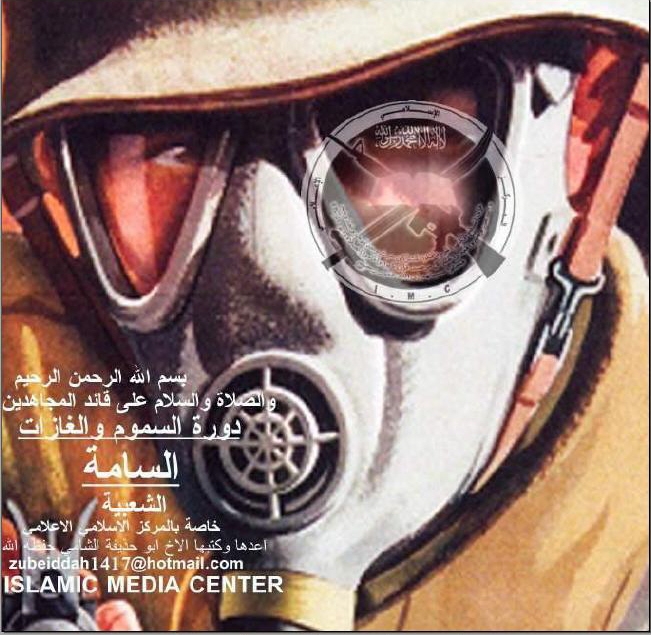
Plate 4, Irhabi007. Seven years ago, now jailed aspiring al Qaeda chemical and biological terrorist Younis Tsouli, aka Irhabi007, password-protected this .pdf jihadist translation of Maxwell Hutchkinson’s The Poisoner’s Handbook by combining the initials of the Islamic Media Center and part of his handle to make “IMC007.” Tsouli believed himself to be a secret agent.
Full size.
Plate 5, Chemical Terrorism — Easy to Do!The same summer, a U.S. Army expert on chemical attack, James A. Genovese, was using this as a slide in a presentation on the alleged capabilities of terrorists.

Al Qaeda never launched a chemical or biological attack in the United States.
A word about the series, Fine Art from the War on Terror. In pictures taken from the archives of DD blog, it attempts to show the attitudes, beliefs and thinking from a time when the bad news on what terrorists could allegedly do came daily.
There are probably no similar examples on the web. Share with your friends.
Real life: Careless overuse of pesticide chemical bug bombs in NYC cause catastrophic fire at beauty salon.
OFAWOT
Permalink
07.11.13
Posted in Culture of Lickspittle, War On Terror at 6:08 pm by George Smith
Plate 3, from the summer of 2006 when the Mubtakkar of Death and Botox Shoe of Death were in the news — dangerous example of what al Qaeda was planning.
Neither materialized.
But al Qaeda would have been pleased. The United States was spooked.
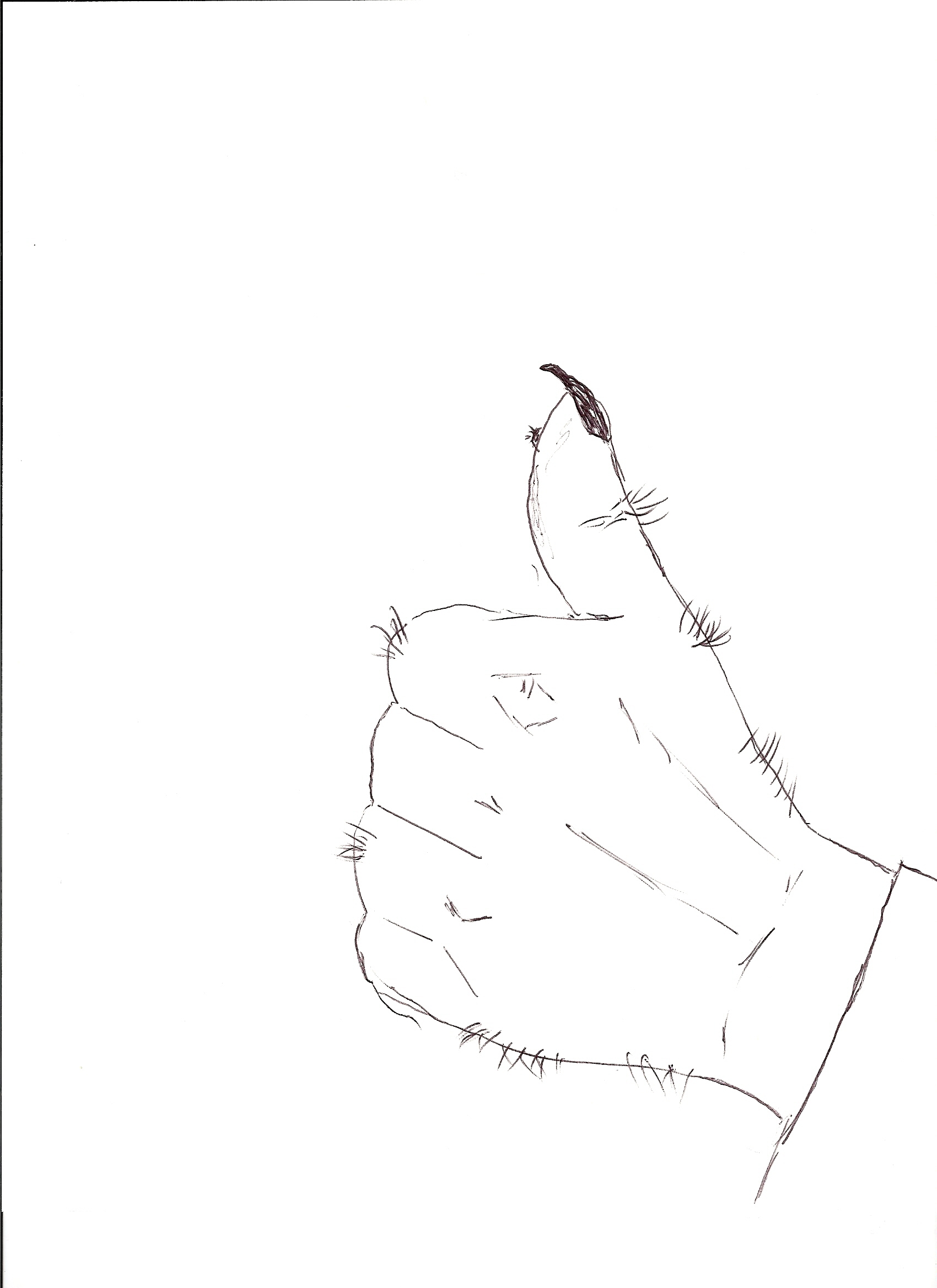
And so — the obscure Ayman Zawahiri Thumb’s Up!
Really bigger.
OFAWOT
Permalink
Posted in Bioterrorism, Crazy Weapons, Culture of Lickspittle, War On Terror at 2:35 pm by George Smith
Plate 1, The Botox Shoe of Death, un-reduced scan of the original from the summer, seven years ago. Made by your host at height of war on terror. The Washington Post newspaper ran a story on how al Qaeda was planning to strike with biological weapons, including botulism, citing one then newly discovered enemy web memo on the matter. They did not inform readers of the fine print which imagined putting botox on the shoes, a gaily laughable proposition.

Actual size — really big.
Plate 2, The
Mubtakkar of Death. About the same time as the al Qaeda Botox Shoe of Death Plan, journalist Ron Suskind revealed an al Qaeda plot in TIME, the Mubtakkar of Death, which was allegedly a cyanide bomb for use on the NY subway. But Ayman Zawahiri spared NYC, it was said.
I had to analyze whether the Mubtakkar was real. There was no evidence that it was although an al Qaeda drawing of a theoretical poison gas bomb that was not like the described Mubtakkar was found in the hands of DHS and distributed around the country as something to look out for. As GlobalSecurity.Org Senior Fellow I was asked to go on NPR to discuss the alleged weapon. The segment was cancelled because I would not tell the host a scary story.
While there is a famous distasteful video of al Qaeda putting a puppy to death with poison gas, there is no public record of the terror organization ever deploying a cyanide bomb although an apocryphal tale, known only to a few, says an attempt was made at one in Afghanistan and that it did not work.

Actual size — really big.
Scan with an aged paper, almost like papyrus, look. Both prints suitable for framing or silk-screening onto T-shirts as educational slices of real American history.
Proof that truth is stranger than fiction. Suitable for any modern iteration of Ripley’s Believe It or Not!
OFAWOT
Permalink
Posted in Culture of Lickspittle, Cyberterrorism, Shoeshine at 10:58 am by George Smith

NSA director, Mr. Keith Alexander, encouraging young hackers to save the US from economic crippling and mass loss of life in the immediate future at the 2012 DefCon meeting in Las Vegas.
From Reuters:
The annual Defcon hacking convention has asked the federal government to stay away this year for the first time in its 21-year history, saying Edward Snowden’s revelations have made some in the community uncomfortable about having feds there.
“It would be best for everyone involved if the feds call a ‘time-out’ and not attend Defcon this year,” Defcon founder Jeff Moss said in an announcement posted Wednesday night on the convention’s website …
Moss, who is an advisor on cyber security to the Department of Homeland Security, told Reuters that it was “a tough call,” but that he believed the Defcon community needs time to make sense of the recent revelations about U.S. surveillance programs.
They need time to make sense of the recent revelation about US surveillance programs. Adorable.
It’s all eyewash and balderdash, anyway.
The NSA and Keith Alexander, of course, will be there. Everyone will. And that’s because everyone knows guvmint security agencies have money, lots of money.
The real affair is the $2000/ticket Black Hat conference, on July 31, a two day affair just before DefCon. The latter, on August 2 is $180 to get in.

Jeff Moss, DefCon founder, maintaining good public relations.
Keith Alexander — from the archives.
Permalink
07.10.13
Posted in Bioterrorism, Ricin Kooks at 2:07 pm by George Smith

The trial of accused ricin mailer Matthew Buquet has been pushed off until next year. The reason? Because there is only one lab in the country that does the forensic ricin determinations needed in the case, according to the judge.
But is this really true? It’s an interesting story.
From the wire:
The federal trial of a Spokane man charged with sending a poison letter to President Barack Obama has been delayed until next year because of the complexity of the case, U.S. District Court Judge Lonny Suko ruled on Tuesday.
Suko pushed back the trial of Matthew Ryan Buquet, 37, until May 5. It was supposed to begin later this month.
Suko agreed with lawyers on both sides that the complexity of the case, including dealing with a deadly poison called ricin, made a speedy trial impossible.
“There is only one lab that can process this evidence because of the nature of the toxin involved,” assistant U.S. Attorney Stephanie Van Marter told the judge.
Prosecutors hoped to have most of their evidence turned over to defense lawyers within the next month, she said.
Defense attorney Matthew Campbell, of the Federal Defenders of Eastern Washington, said that his office would then have to undertake complex analysis of that evidence.
“There can be no trial in a speedy time,” Campbell said.
The lab being referred to is the National Biodefense Analysis and Countermeasures Center and, more specifically, its National Bioforensic Analysis Center, or NBFAC.
The NBACC homepage does not list the cost of construction but material from the web pegged its estimated price from 120-150 million dollars. It is run by Battelle under a contract for 500 million.
“NBACC’s National Bioforensic Analysis Center (NBFAC) conducts bioforensic analysis of evidence from a bio-crime or terrorist attack to attain a ‘biological fingerprint’ to identify perpetrators and determine the origin and method of attack,” reads its homepage.
“NBFAC is designated by Presidential Directive to be the lead federal facility to conduct and facilitate the technical forensic analysis and interpretation of materials recovered following a biological attack in support of the appropriate lead federal agency. On January 12, 2007, NBFAC achieved ISO 17025 accreditation, the most rigorous international standard of testing and calibration by which a laboratory can be assessed. Through this achievement, NBFAC has established itself as a model for bioforensic laboratory practices.”
It certainly sounds like the expensive NBACC has all the tools necessary to process ricin samples.
But does it?
In a recent domestic ricin case dating from last year, I was consulted as Senior Fellow at Globalsecurity.Org for my expertise in ricin terrorism.
In that case the NBACC outsourced the government’s ricin analysis and characterization to another lab, American International Biotechnology Services (AIBiotech) in Richmond, VA.
This was a startling thing. Why did the country’s premier bioterrorism research facility outsource its lab work to another firm? The NBACC was built, and — indeed — its homepage explicitly states that its mission was to have its highly accredited facilities be a model for bioforensic laboratory practice.
A colleague, Milton Leitenberg, when hearing of the NBACC procedure, asked sources in the US biodefense community why this was done. No answers were provided.
So, yes — indeed, with all the shuffling of samples and evidence through offices and labs, it is easy to understand why a ricin trial would be put off.
But, strictly speaking, it’s not because only one lab can (or does) the work.
And it shows that, as in many things, the taxpayer does not get good value for dollar, or even cheaper work, when everything is outsourced as knee-jerk procedure. In fact, the opposite.
Today’s Washington Post featured a news piece on Booz Allen Hamilton and the outsourcing of work in the national security megaplex.
Near the end, there was this:
But the growth in contracting in defense and homeland security work continues. That has been fueled by several factors — ongoing public worry about terrorism, antipathy toward big government and an evolution in Washington’s revolving-door culture that provides extraordinary rewards to top government officials who go private, experts say.
Yet even outsourcing’s most vocal skeptics agree contractors are here to stay, despite what they contend are illusory savings.
“Curbing the use of contractors would be difficult or impossible,??? said Chuck Alsup, a retired Army intelligence officer and vice president of the Intelligence and National Security Alliance, an Arlington County-based association of private companies and individual experts. “It would be, frankly, unwise.???
BioWatch is a now infamous and expensive government program, put together in the aftermath of the anthrax mailer, to detect aerial release of pathogens in major American cities.
After ten years, it does not work.
In 2012, the Los Angeles Times ran a series of news stories on it that tore apart the program’s reputation.
Last year, David Willman of the Los Angeles Times wrote:
President George W. Bush announced the system’s deployment in his 2003 State of the Union address, saying it would “protect our people and our homeland.” Since then, BioWatch air samplers have been installed inconspicuously at street level and atop buildings in cities across the country — ready, in theory, to detect pathogens that cause anthrax, tularemia, smallpox, plague and other deadly diseases.
But the system has not lived up to its billing. It has repeatedly cried wolf, producing dozens of false alarms in Los Angeles, Detroit, St. Louis, Phoenix, San Diego, the San Francisco Bay Area and elsewhere, a Los Angeles Times investigation found.
Worse, BioWatch cannot be counted on to detect a real attack, according to confidential government test results and computer modeling.
The false alarms have threatened to disrupt not only the 2008 Democratic convention, but also the 2004 and 2008 Super Bowls and the 2006 National League baseball playoffs. In 2005, a false alarm in Washington prompted officials to consider closing the National Mall.
Federal agencies documented 56 BioWatch false alarms — most of them never disclosed to the public — through 2008. More followed.
The ultimate verdict on BioWatch is that state and local health officials have shown no confidence in it. Not once have they ordered evacuations or distributed emergency medicines in response to a positive reading.
“I just think it’s a colossal waste of money … It’s a stupid program,” one scientist for the Colorado Department of Health and the Environment told the newspaper.
Even my hometown has been affected by BioWatch’s failures.
Wrote the Times:
Dr. Takashi Wada, health officer for Pasadena from 2003 to 2010, was guarded in discussing the BioWatch false positive that occurred on his watch. Wada confirmed that the detection was made, in February 2007, but would not say where in the 23-square-mile city.
“We’ve been told not to discuss it,” he said in an interview.
Despite its failures and increasing news of such, no one can halt the BioWatch program. Put together by the federal government and under the control of the Department of Homeland Security, BioWatch is also run by private sector national security contractors.
One such contractor is a business virtually no Americans have heard of called the Tauri Group.
It’s website is bland, revealing little except that it’s a great company to work for and that one of its specialties is combating weapons of mass destruction. A page mentioning its involvement in BioWatch is
here.
In e-mail discussions between your GlobalSecurity.Org Senior Fellow earlier this year on the money spent battling the threat of bioterrorism (not counting the recent goofball ricin mailers, there have been no deadly bioterror attacks since Bruce Ivins) an insider with knowledge of the BioWatch program had this to say:
“Some of the Tauri Group contractors running BioWatch were making $350K on top of their military pensions.”
BioWatch has cost one billion dollars to date. The sum indicates why there is intense effort to sustain it.
Outsourcing, from the NBACC and trivial ricin mail cases, to BioWatch, does not necessarily save taxpayer dollars.
In fact, just the opposite.
Is there an echo in here? (Just joking.)
Los Angeles Times reporting on BioWatch.
A Tauri Group profile and partial employee roster can be visualized at LinkedIn.
Permalink
07.09.13
Posted in Culture of Lickspittle, Cyberterrorism at 12:39 pm by George Smith
Last week GlobalSecurity.Org was consulted by a reporter from the Associated Press on the Dark Seoul/Operation Troy report on recent cyberattacks in South Korea issued by McAfee. I looked it over and talked with her awhile over the subject.
Mostly, what I said — whether it ever gets published is immaterial at this point — was that it was a straightforward analysis on the use of malware to get into South Korean networks. The final component in it, code that “wiped” the master boot record seemed childish, something that was normal for virus-writers to put in their creations 20 years ago. (The AP piece that resulted is here. Martha Mendoza gave the McAfee report to GlobalSecurity and called me.)
In fact, naming conventions within the code — and the hacking group names cited in the McAfee report — were standard computer hacker and cyber-vandal stuff.
Typically, the news media has tried to make it into something a little more than what McAfee corporate was willing to put on paper in “Dissecting Operation Troy: Cyberespionage in South Korea.”
And this is easily illustrated by comparing excerpts from the McAfee report on Dark Seoul/Operation Troy with a sample story today, taken from the Washington Times.
The WaTimes:
Highly trained, well-funded and very persistent computer hackers have been seeking to steal secrets from U.S. and South Korean military networks for at least four years, according to new data released by security researchers.
The hackers have all the characteristics of state-sponsored cyberattackers, said Ryan Sherstobitoff of the computer security firm McAfee Inc.
“The people behind this are highly trained, well-funded and very persistent,??? Mr. Sherstobitoff said. “They’ve been targeting the networks for years.???
The hackers, who identified themselves as the “New Romantic Cyber Army,??? used crude attacks and aped the tactics and jargon of so-called “hacktivist??? groups, such as the anarchistic coalition Anonymous.
But behind the scenes, they were exploiting highly specialized and targeted cyberespionage tools to burrow into classified networks of the U.S. and South Korean military.
“The primary mission was to steal secret military data,??? Mr. Sherstobitoff said. “That’s been in the shadows until now.???
The Pentagon had no comment Monday.
The “very advanced, very sophisticated??? cybertools …
But what Ryan Sherstobitoff told the WaTimes isn’t what he and the two other McAfee employees whose names are on the report acturally write.
From its initial summary:
Our analysis of this attack—known first as Dark Seoul and now as Operation Troy—has revealed that in addition to the data losses of the MBR wiping, the incident was more than cybervandalism. An analysis of malware samples dating back to 2009 suggests the ongoing attacks on South Korean targets were actually the conclusion of a covert espionage campaign …
State sponsored or not, these attacks were crippling nonetheless. The overall tactics were not that sophisticated in comparison to what we have seen before. [Bold mine] The trend seems to be moving toward using the following techniques against targets:
• Stealing and holding data hostage and announcing the theft. Public news media have reported only that tens of thousands of computers had their MBRs wiped by the malware. But there is more to this story: The main group behind the attack claims that a vast amount of personal information has been stolen. This type of tactic is consistent with Anonymous operations and others that fall within the hacktivist category, in which they announce and leak portions of confidential information.
• Wiping the MBR to render systems unusable, creating an instant slowdown to operations within the target
An excerpt from the reports “Analysis” section:
What were the motives behind these attacks and why did the attackers chose certain targets? The attacks managed to create a significant disruption of ATM networks while denying access to funds. This wasn’t the first time that this type of attack—in which destructive malware wiped the systems belonging to a financial institution—has occurred in South Korea. In 2011 the same financial institution was hit with destructive malware that caused a denial of service.
The attackers left a calling card a day after the attacks in the form of a web pop-up message claiming that the NewRomanic Cyber Army Team was responsible and had leaked private information from several banks and media companies.
They also referenced destroying the data on a large number of machines (the MBR wiping) and left a message in the web pop-up identifying the group behind the attacks. The page title in Internet Explorer was “Hey, Everybody in Korea???????
The report goes on to explain the terminal part of the operation — by two groups which were probably the same (the second being named the Whois Hacking Crew) was preceded by a period of a couple of years in which south Korean networks had been penetrated by the same malware and related offshoots, the function of which was to scan hard disks for military subject files, zip them into an archive, and pipe them off to the intruders.
However, was this search a sophisticated one, as described by the media?
Not really, from the evidence in McAfee’s own report.
Here’s the germane material:
Drive scanning locates classified information on target systems and gives the attacker an overall idea of what these military networks have. The malware searches the root disk, counts the number of interesting files, and determines the level of that system’s importance to the attacker. The search criteria are primarily specific file extensions and keywords in document titles. The keywords are all military specific. Some refer to specific military units and programs that operate in South Korea.
[I’ve included a partial list of the search terms, which are elementary.
Really, anyone could come up with them and terms specific to South
Korea aren’t their in abundance, certainly nothing an outsider wouldn’t be expected to be aware of.
“Key Resolve drill,” for example, is just the name for a world publicized yearly joint exercise between the US and South Korea.]
Operation
Division
Corps
Brigade
Solidarity
Army
Navy
Battalion
Air force
U. S. Army
Joint Chiefs of Staff
Defense
Tactics
Password
North
Infantry
Key Resolve drill
Attack
Artillery
Engineer
One could conclude it would have been almost as specific to have just copied off the entire data volume of the disks.
The McAfee paper puts forward no proof the files grabbed using this search procedure were classified. Some may have been. Perhaps all were. Or maybe few or none. There is no way to make an estimate.
In the Associated Press’s piece on the matter, the McAfee researchers had this to say:
McAfee also said it listed only some of the keywords the malware searched for in its report. It said it withheld many other keywords that indicated the targeting of classified material, at the request of U.S. officials, due to the sensitivity of releasing specific names and programs.
“These included names of individuals, base locations, weapons systems and assets,” said Sherstobitoff.
Perhaps. Or maybe not.
US base locations, weapons systems, assets — even individuals (for example, commanders) are not secret in South Korea. Indeed, entire orders of battle and weapons systems are publicly available on the web. Rather notably, ahem, at GlobalSecurity.Org! For which I am a Senior Fellow! And which is a go to resource for thousands and thousands of American military men (civilian and enlisted) and those interested in global military affairs around the world!
Dear me, Ryan Sherstobitoff.
There is one matter worth noting, a critical difference between news reporting on Dark Seoul and the McAfee white paper on it.
The McAfee white paper, Shertobistoff et al, does not use the term “North Korea” even once.
More bluntly, McAfee corporate, being corporate, didn’t formally publish any explanation that “North Korea” was the responsible party.
It employs only the weasel-term, “state sponsored,” but did not — in print — even come down unequivocally on that.
In interviews, Sherstobitoff went well beyond what was actually published by McAfee, adding a variety of assertions and claims not put down on the digital paper.
Subsequently, every news piece came down with North Korea as the culprit.
“Was North Korea behind Operation Troy?” I was asked by the Associated Press.
I told the agency there was no way to tell from what what was in the report. Maybe, maybe not. Maybe a hacking gang. The wording included in the analysis, the destructive code “dropper” made it look childish and antique, like something virus writers did two decades back.
Whatever, I agreed with the assertion in the report that the tools and methods used, in the words of the McAfee authors, “were not that sophisticated in comparison to what we have seen before.”
From the Washington Times today:
Analysts say that the revelations about these attacks ought to prompt U.S. officials to reassess North Korea’s cybercapabilities.
Pyongyang’s hackers now must be rated “as good as Iran,??? said James A. Lewis, a cybersecurity scholar at the Washington-based Center for Strategic and International Studies.
“The Iranians moved up quickly,??? Mr. Lewis said, noting the recent spate of “denial of service??? attacks against U.S. banks laid at their door.
U.S. officials have said the greatest danger posed by cyberattacks is disruption of vital infrastructure, such as electric power transmission.
For the AP, Lewis was also quoted:
“I used to joke that it’s hard for the North Koreans to have a cyber army because they don’t have electricity, but it looks as if the regime has been investing heavily in this,” said Lewis.
If so, opinions would vary on whether this constitutes getting your money’s worth.
What actually happened during the North Korea imbroglio, though?
The Hermit Kingdom had a ritualized fit over the annual joint US/South Korean military exercise. It fueled it missiles, made silly videos, threatened that it would attack Guam, Hawaii or the west coast of America with a nuclear strike, shut down a joint business operation with South Korea and … and … and …
Nothing. The Hermit Kingdom’s ruler, the pudgy kid, had no cards to play.
But according to a news story, like many today, in the Washington Times, North Korea is punching above its weight (although never mentioned by McAfee) in cyberspace, as good as Iran.
Iran. Does it even matter?
Well, of course it matters to cybersecurity companies and the South Korean IT business workers who had to restore systems when master boot records were wiped, which would have taken time, but which was reversible.
The question unanswered is how critical was the loss of at least public (but not provably secret — although the latter is a very broad term — from) information, from Internet-connected military networks, but not classified networks, according to the South Korean military.
In summary, from the NewRomanic Cyber Army and keyword searches for “artillery,” “defense,” “secret” and “air force” to North Korea as a cyberpower, to “disruption of vital infrastructure, such as electric power transmission.”
In one thousand words or less. This is called putting your fingers on the scale.
Permalink
07.08.13
Posted in Culture of Lickspittle, WhiteManistan at 3:45 pm by George Smith
Teaser excerpts from Shit from WhiteManistan, a new Taschen coffee table art book on folk customs in America.

Plate 1: Sedition is Tradition Memorial Parade, July 4, Water Moccasin, NC.

Plate 2: Celebration gathering on news that a nuclear attack sub being refurbished in the nearby Norfolk navy yard was being renamed the John Wilkes Booth. (Lexington, VA.)
Permalink
Posted in Bioterrorism, Ricin Kooks at 9:41 am by George Smith

The look of national bioterrorism defense entitlement spending in Omaha, Nebraska. The flush days may be ending.
“Federal funding for the Special Pathogens and Biosecurity Laboratory at University of Nebraska’s Medical Center peaked at $1.2 million, has been sliced in half in recent years, and could get whacked again,” reads the Omaha World Herald caption on the picture.
It’s the type of article that shows up about once a month now, bioterrorism defense scientists at obscurely named labs built in the great counter-bioterror boom after anthrax, exuding woe that their work is being, or could be, slashed.
The country way over-invested in bioterror defense in the wake of 9/11. Free money went out for almost a decade. No results were required and none were furnished. During the time the public was bombarded with assertions that catastrophic bioterror attacks were easy to mount and likely.
None of the claims of the threat-mongers materialized. That’s zero.
Many of our most famous bioterror defense researchers grew wealthy during a period when millions of other Americans saw their economic futures languish or go up in smoke. Infrastructure repair and spending for the public good shriveled but national security spending ballooned.
Now, in some places, it is getting a much needed haircut. But still not enough.
It’s a hard fact the poor in America have no political voice. But those in national security work always do.
The Omaha World news piece tries to paint a picture of a high tech lab engaged in secret and sensitive work, vital to the safety of citizens.
It does not help the case, however, to mention ricin as a big thing.
From the Herald:
The three-ring binders, each one containing its own nightmare, line one shelf in the lab.
“Bacillus anthracis,??? one binder is labeled …
“Ricin,??? another binder is labeled. That would be the powdery poison that a Mississippi man allegedly mailed to President Barack Obama this spring in the upside-down days after the Boston Marathon bombing.
There are other binders, many others, but as I write down their names, the Omaha scientists who run Nebraska’s Special Pathogens and Biosecurity Preparedness Laboratory politely ask me to stop …
This bookshelf of horrors needs to stay secret, they say.
“We’d let you read this, but then we’d have to lock you up for 10 years,??? says Dr. Steven Hinrichs, director of the Nebraska Public Health Laboratory, which oversees the biosecurity lab.
He points to the ricin binder. He is joking. At least I think he is.
However, the public knows there’s not much book in ricin terrorism having experienced a uniquely remarkable period of it this year.
Ricin, or more descriptively — castor powder, in mail is hardly a hazard. This despite the national line, now twelve years old, that it is profoundly deadly and easy to make.
Yes, powder from beans is easy to make.
A crazy beauty in a Halloween cat-suit did it. A karate studio instructor starring in a Bud Light beer Battle of the Bands promotion did it. And a guy in Washington who looked like he fell off the nasty end of a garbage truck also did it.
In the long period between now and the beginning of the bioterror defense boom there’s been essentially no change in the science used to examine ricin or samples suspected to be contaminated with it. In fact, the science is the almost the same as when I was in grad school working protein biochemistry in the mid-Eighties.
I know. I’ve seen the work from ricin cases, been asked about it from a professional’s standpoint.
There’s nothing new needed for ricin. The FBI gathers its evidence and does preliminary testing. Then it sends its sample to the mega-bioterror defense lab built in the response to Bruce Ivins, the National Biodefense Analysis and Countermeasures Center (NBACC) in Maryland.
Then the NBACC, despite its vast resources and its ability to do the work in house, outsources the determinative work to yet another lab. And it’s all part of the chain of over-spending established during the war on terror.
Think of it as nationally hiring crews of hundreds to screw in a couple light bulbs.
Why?
Perhaps because they were given way too much money.
Because the national leadership over-reacted over a long period of time. Because no very-important-person can suggest the bioterrorism threat has been hyped and inflated and that the response to it is now glaringly inappropriate without losing their career.
The Omaha scientists find their lab “increasingly starved for once-plentiful federal cash,” writes Matthew Hansen for the newspaper.
Then, as many journalists have done before him, he puts his fingers on the scale:
What if everyone decides the [bioterror threat] is no big deal?
An amount of ricin roughly equivalent to three grains of salt can kill a human. A Mississippi man tried to send ricin to the president of the United States in April. A Texas woman — a small-time actress in the TV series “The Walking Dead??? — tried to send President Obama ricin in May.
And yet you would’ve barely known that if you looked at the front page of a newspaper. The first ricin story got crowded out by the Boston bombing, and the second barely made a blip in the 24-hour news cycle.
It’s laughable.
You couldn’t get away from Shannon Richardson during the days leading up to her arrest and after. Her husband made celebrity morning television to speak tearfully of his scheming wife. Thousands of pictures of castor seeds and Shannon in various fetching outfits overflowed Internet gossip sites.
James Everett Dutschke became ubiquitous on the evening news. His
coincidentally bad timing with respect to his ricin mail scheme, coming as it did during the week of the Boston bombing, gave the incident even more publicity.
No, the public got a very good look at ricin terrorism. And there was a cognitive disconnect between what it saw and what it had been told about the allegedly deadly horror of it over the last twelve years.
The [scientists of the Special Pathogens and Biosecurity Laboratory at UNMC] bring up the fact that you can find recipes on the Internet to cook up any number of biological horrors,” adds the reporter.
Something that’s been said thousands of times in the last dozen years. Repeated ad nauseum in the news, worked into television shows, dramatic series and movie plots.
Mostly it’s been convenient bullshit. That it has lost a lot of its power to frighten and persuade is not really a case of public apathy.
But it has always had a lot to do with those defending their career turf.
A secret three-ring binder for lil’ ol’ me? Tee-hee.
Permalink
07.07.13
Posted in Culture of Lickspittle, Shoeshine at 3:12 pm by George Smith
Nick Bilton, the New York Times tech journalist who gave the country Cody Wilson and the 3D-manufactured plastic gun fills up space today with the future urban paradise created by the self-driving car. It’s something only one of the privileged shoeshine boys of American tech plutocracy could write.
Self-driving cars will always be for the topmost in US society. As inequality continues to surge, unless they’re giving them away, they’ll never make a dent in southern California in what’s left of my lifetime. Indeed it’s laughable to posit that southern California’s great servant underclass would ever benefit from self-driving cars.
Do they even know about Google’s many vanity projects?
Bilton’s fantasy, excerpted:
As scientists and car companies forge ahead — many expect self-driving cars to become commonplace in the next decade — researchers, city planners and engineers are contemplating how city spaces could change if our cars start doing the driving for us. There are risks, of course: People might be more open to a longer daily commute, leading to even more urban sprawl.
That city of the future could have narrower streets because parking spots would no longer be necessary. And the air would be cleaner because people would drive less. According to the National Highway Traffic Safety Administration, 30 percent of driving in business districts is spent in a hunt for a parking spot, and the agency estimates that almost one billion miles of driving is wasted that way every year.
“What automation is going to allow is repurposing, both of spaces in cities, and of the car itself,??? said Ryan Calo, an assistant professor at the University of Washington School of Law, who specializes in robotics and drones.
Harvard University researchers note that as much as one-third of the land in some cities is devoted to parking spots. Some city planners expect that the cost of homes will fall as more space will become available in cities. If parking on city streets is reduced and other vehicles on roadways become smaller, homes and offices will take up that space. Today’s big-box stores and shopping malls require immense areas for parking, but without those needs, they could move further into cities.
“People might be more open to a longer daily commute, leading to even more urban sprawl.”
It’s worth repeating, enough to make you fall from the chair in laughter if you’ve ever spent time in Los Angeles County and the Inland Empire.
Who, exactly, is on our soCal roads who doesn’t already do an excessive commute in a region that defines urban sprawl in the continental United States?
And Google and expensive self-driving cars for the upper class and their servants will fix it. Sure. Google will fix everything, just as it does now, only better.
Here’s what might fix it.
Mass unemployment, underemployment and inequality climbing inexorably higher. Potentially, there could be less cars on the roads because people won’t be able to afford to drive.
That will alleviate congestion and make inner-city parking easier for the haves.
One professor of “the Internet and society” at Stanford, Bryant Walker Smith, imagines his driver-less car becoming an extension of his home.
This next bit, on the other hand, is perfectly great. Escape from WhiteManistan can definitely see the overlords and minders this way in a decade or so:
“I could sleep in my driverless car, or have an exercise bike in the back of the car to work out on the way to work,??? he said. “My time spent in my car will essentially be very different.???
Your Personal Fitness Gym car, streaming smoothly along amidst the the hundreds of thousands of late models and junkers that must be kept going by the slave labor class.
Here’s a thought question.
What’s the future potential for class resentment in the servant class to boil over into vandalism and sabotage of self-driving cars? You still have to rub elbows, or bumpers, on those big freeways and cities, wizards of tomorrow.
Oh, the future’s brimming with promise
And the promise is heading our way
So keep your eyes on that shining horizon
Make way for tomorrow today!
Daring new devices will help us to succeed
Better tools for living will meet our every need
Incredible inventions through new technology
Extending life’s dimensions for all humanity!
Permalink
Posted in WhiteManistan at 11:55 am by George Smith
Because nothing says you’re just an ordinary white guy ordering a hamburger at the lunch joint with everyone else like going to the Austin capitol building park on a Sunday afternoon with your assault rifle as a gesture of good will and civic outreach. The heart swells at the unique citizenship of an assault rifle carrying-biker wrapped up and looking like the Invisible Man in an old army helmet, only with the American flag colors in place of the bandages. Or the utterly unsurprising image of a fellow who appears to have creatively modified his Klan uniform into just a normal bed sheet or something.
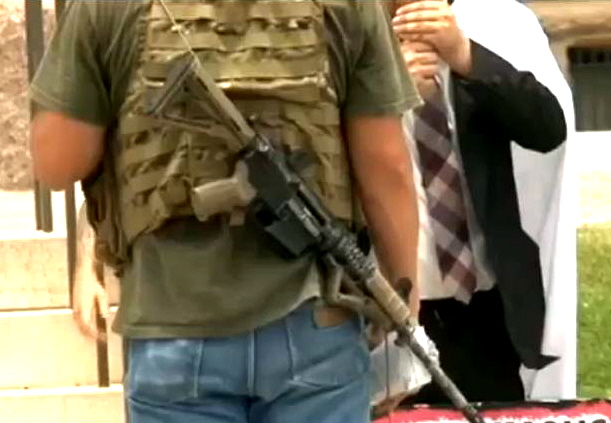
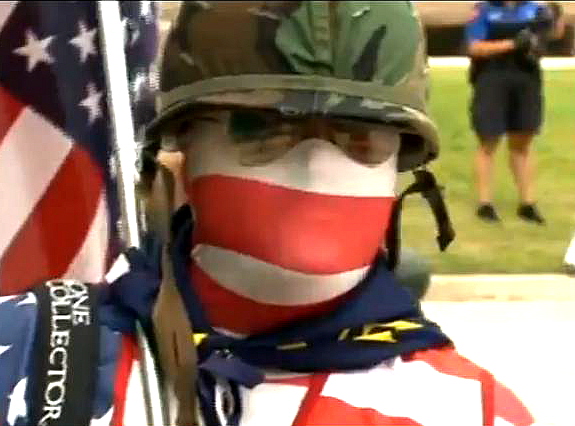
Visit Texas today! The barbecue is great!
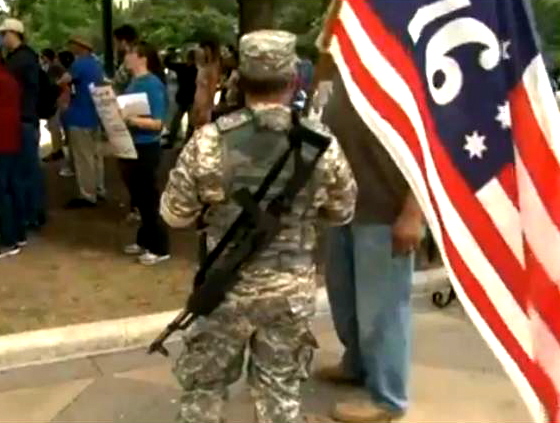 Everything is bigger in Texas!
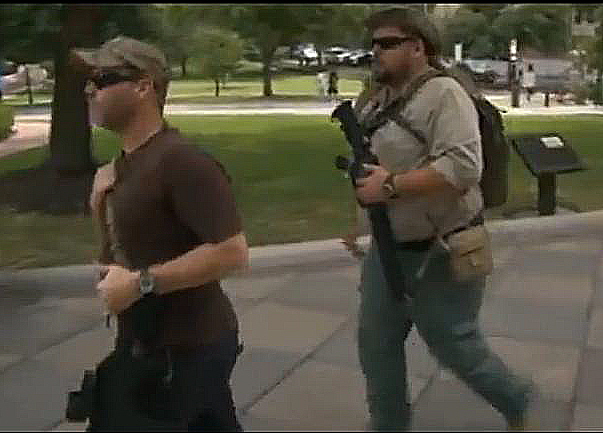
Just normal friendly folks like you!
Even made the police a little nervous as you can see here.
Permalink
« Previous Page — « Previous entries « Previous Page · Next Page » Next entries » — Next Page »