I was recently at a Washington Nationals baseball game. While waiting for a hot dog, I overheard the conversation behind me. A management consultant for a big national firm was telling his colleagues that his job was to “market products to the Department of Homeland Security.??? I thought to myself: “Oh, my! Inventing studies about terrorist threats and selling them to the U.S. government, is that an industry now????
We’re out of balance — the balance between security and prosperity. We need to be in a race with China, not just Al Qaeda. Let’s start with electric cars.
Anyway, Friedman needs a pat on the back. He was one of the pundits who contributed to the private sector security industry boom after 9/11.
Specifically, in touting the Iraq War and letting us all know that every once in a while the US had to smash a country in the Middle East for the sake of sending the message: Suck on this!”
And ever since the country has had a booming business infrastructure for finding various new and old menaces, even if they either don’t or barely exist.
If this is actually news to Friedman, and not a failed joke, it’s because he’s spent his time marveling at the above-ground plastic mine business in China. Among other wonderful things.
In today’s Los Angeles Times, semi-related news came from a business story on Northrop firing 500 by the end of the year.
One of the few sectors of the economy where jobs have been very durable during the Great Recession has been national security. A 500 person lay-off at Northrop does not so much show that it has had an equal effect on defense. But rather that the scale of the collapse of the economy for the middle class and the subsequent debt the government has taken on are finally causing relatively minor cutbacks — with respect to the rest of the country — in that sector.
The cutbacks are the latest to hit the aerospace industry amid concerns about the ballooning deficit.
After growing by double digits every year since the 2001 terrorist attacks, defense spending is expected to rise only about 1 percent annually over the next five years …
Lockheed Martin Corp., the nation’s largest defense contractor said earlier this month that about 25 percent of its executives opted for a voluntary retirement program to cut costs as defense spending slows. More than 600 vice presidents and directors applied …
Six hundred vice presidents and directors. That’s nice.
In blog related news, even the Marines get bedbugs. They are so without pity.
Throw the bedbug plague in with all the other signs of national decay. With transience in housing now part of the national structure due to the Great Recession, it’s provided bedbugs with a superhighway to new digs everywhere.
The things crawl in
The things crawl out
The bedbugs prance across your snout
The neighbors have all come and gone
But something else is always home
Spray some Raid around the bed
So to bedbugs you are not fed
Bedbugs are always free!
Ha-ha-ha-ha-ha
Spray some Raid on your nightshirt
It looks better than bedbug dirt
If you detect a sudden itch
There’s always more, it’s just a —–
If you tell of bedbug bite
No friends or presents will come at night
Bedbugs tell of social justice
There ain’t none
The usual laugh-out-loud Yahoo/Investopedia article on Hot Jobs!
Number one on Monster: Lawyers need more secretaries and process workers!
Number two: And the best paying, jobs in the financial sector, the people who caused the mess but who have also benefited the most greatly from it. They can buy the $180 harmonica and the 99 cent Harmonica app for their iPhones!
At the bottom, with the poorest wages: Bed pan technicians, people to clear away the tubes and waste in hospitals, job security for those who hook up the oxygen and insert thermometers in the anus. Even though the work is hard and takes dedication, it’s not well compensated. If the person you’re married to has a job in it, too, you can probably get by. Or else it’s four or five buddies in the one or two bedroom apartment.
Other booming job opportunities: Engineers for making flying robot assassins, executives for selling arms to nations in the Middle East, border patrol — sadly, the latter pays the least.
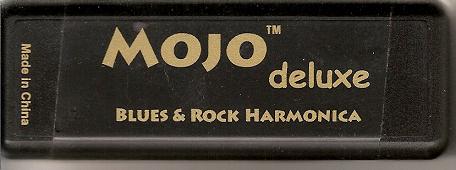
Readers know my mojo-free Mojo Deluxe blues & rock harmonica, made in China by slave labor for pasting to a cheap paperback instruction manual, is my metaphor for deindustrialization and major fail in this country.
Historically, the blues harmonica was made to be a cheap instrument, something anyone could afford, pick up and play a few tunes on. There is no justification for a “blues & rock” harmonica to be made in China, for a couple dimes, so it can be sold in the US.
The harmonica, by nature, was already cheap!
The Mojo Deluxe is such a good metaphor because it matched with the outsourcing of the US guitar industry, written about here two years ago.
It was described thusly, using the American brand Fender:
Turning back to the category of electric rock instrumentation, the all-encompassing history of Fender, “The Soul of Tone: Celebrating 60 Years of Fender Amps,” has something to say about American companies and the Chinese slave labor workforce.
Fender is THE American brand name in electric guitar amplifier. We’re going to skip rehashing most of its history in which it rose to prominence as a vendor of classic designs and then almost went completely out of business. Instead, we fast forward to today when Fender offers a dominating and broad line of electric guitar amplifiers, equalled only by Marshall and two other big American manufacturers, Peavey and Mesa Engineering. Because Fender offers a broad line, some of its amps are made in China.
Paradoxically, the book indicates Fender would rather not make inexpenive junk amplifiers for the dilettante. However, because of realities in the market, it must.
“In the old days, you walked into a music store and took whatever you could get your hands on,” says Fender’s Shane Nicholas to author Tom Wheeler.
“But over time, people have become much more demanding. They expect a lot of features at low prices…”
“There are a whole lot of inexpensive Chinese amps out there, and many of them offer plenty of features. We need to compete with that … anybody who makes a small entry-level amp has gone to Asia.”
Nicholas describes the cheap Fender Frontman amp as formerly being made in Mexico: “… and every dealer loves it and they’re all making money with it, and then a year later the same dealers say, “Hey, that’s too expensive!”
And it had become “too expensive” because it had been undercut by another western brand which has moved its manufacturing to China, making something similar but even cheaper. And Fender was compelled to move the amp’s manufacture to the same country.
Fender, like many other American companies, deserves condemning for the rationalization.
The company ceded its America-made brand for the everyman for essentially a glorified boutique shop, making custom guitars and craftsman instruments only for the wealthy or those few with major label contracts. It’s probably fair to say that not everyone who now works at Fender can afford to regularly buy the company’s select US-made goods unless they get a good employee discount.
They can, as an alternative, purchase the Chinese-made Fender-branded stuff.
And over the years DD has run into many musicians who marvel at their 99-dollar Chinese-made purchases without wondering why it is they can’t afford the US made good anymore. They give no real consideration to how their day job wages have either stagnated or been compressed.
And they don’t see any illogic in yakking about how they’ve upgraded the slave labor instrument with $100 dollars in replacement parts, also mostly made in China.
Which brings us back to harmonicas and the US model of “reindustrialization.” In this case, the revival of manufacturing on a very limited base, one which makes only boutique goods.
The only US manufacturer of harmonicas is a company called Harrison.
In Rockford, Illinois, its facility is in a small part of the old Ingersoll machine tools manufacturing plant. Ingersoll was an American brand name, too. And because of US deindustrialization and slave labor in non-democratic Asian countries, it blew away in the wind. And unemployment in Rockford is devastating just like everywhere else.
The story of Harrison Harmonicas is well told in a clip from the BBC here.
It’s full of cognitive dissonance but does effectively get across the toll of deindustrialization in the heartland.
One can only marvel at the paradox of an instrument, which was — by nature — to be made cheaply, being designed on a super-expensive 3-D manufacturing machine.
A small one limited to, once again, the dilettante with money to burn, those who haven’t yet maxed out their credit cards, some pro musicians. In the plutonomy, you can have a consumer product manufacturing base, as long as its restricted to boutique stuff for the haves.
Certainly, when DD was regularly playing the dive bars in the old Lehigh Valley, a place very much victimized by deindustrialization, those who played harmonica would have had to think long and hard about whether they wished to spend 180 dollars for an instrument.
This does not, per se, reflect poorly on a company like Harrison Harmonicas. But it is to say they are not replacements for an America that makes things. And no matter how many of these businesses you now see profiled in news stories, they do not provide significant employment opportunities for average Americans. They do not replace the old Ingersolls or Bethlehem Steels.
They are, instead, a result of the ruinous path we’ve taken. One that puts you in the national blind alley of modern Swiss watch-making, high-end manufacturing making patently over-engineered and needlessly high tech things — extravagances, status symbols and frou-frou goods which can be pitched to the haves.
As for slave labor Mojo Deluxe blues & rock harmonicas?
They never really took off. The shopping cart link for them on the harmonica book author’s website is dead two years after it hit the market.
If you want one badly enough, you can still buy it on Amazon.
Wait long enough and there’ll be some be-a-bluesman app for your iPhone. You won’t have to play the Fender Strat or Mojo Deluxe at all.
Nb: There was probably no success in store for the Mojo Deluxe because another American-named company was already marketing a slave-labor harmonica set, LoDuca.
Good news, lads ! Good news! The Mojo Deluxe starred in the video but was not actually played for it!
Sunday wouldn’t be complete without Tom Friedman going on about the latest miraculous thing he’s discovered in China.
His examples this month are all obviously built on a trip to some sales convention there, an event where he’s discovered a few American carpet-baggers who’ve taken their money offshore for manufacturing.
This week it’s Kevin Czinger of Coda, a Santa Monica-based business that’s bringing a Chinese-made electric sedan that costs $45,000 — half the price of Elon Musk’s electric car for the super-rich — to California.
In DD’s video of Friedman getting pied set to China Toilet Blooz 2.0 , Friedman’s quote about Chinese wonderfulness being another “Sputnik” moment was featured.
China is doing moon shots. Yes, that’s plural. When I say “moon shots??? I mean big, multibillion-dollar, 25-year-horizon, game-changing investments.
Naturally, what’s not in this column is that there may not actually be a market for a $45,000 electric sedan, Chinese made, one that goes only 100 miles and requires six hours to charge, in America. Except for dilettantes and the wealthy. (There may, indeed, be a few thousand of those.)
Or that there may be some resistance to the idea of buying a Chinese car, considering the experience Americans already have with faulty products made over there.
There’s a bit more critical piece on the Coda here.
And Friedman naturally does not mention that there are no Chinese-workers making the sedan part who can afford them.
Or that rebates and tax rewards from the US government and the state of California, aimed at providing incentive for buying Codas, outwardly seems to guarantee that a significant portion of the taxpayer money may go to China for the sake of the man’s business venture.
The Dickensian characters of Eat Shit Farms appeared in this short news video from the Associated Press:
Everyone is familiar with the image of the American businessman who now invokes his 5th Amendment right to protection against self-incrimination.
Then there was the Austin “Jack Decoster/Peter DeCoster team from Eat Shit Farms Wright County Egg, the business at the center of the biggest spread of foodborne salmonellosis in US history.
Their written testimony, here, is predictably self-serving.
Their business grew too fast. And it’s always been aggressively fighting Salmonella. Et cetera.
Pictures from the FDA are worth a bit, showing sides of Eat Shit Farms’ hen house broken and bulged out from piles of crap, liquid excrement seeping from various holes and cracks, and dead flies everywhere.
Bart Stupak, the outgoing Michigan congressman and chairman of the House Energy & Commerce committee, was the face attached to the investigation.
Stupak, an anile character known only for trying to screw up healthcare reform and living in the shady place now known as the C Street house, released as pro formaa statement of concern and rectitude as possible.
Congressman Bart Stupak was alarmed. He was on the case. There were flies and manure everywhere. It probably took a staffer all of an hour and a half to write and put into .pdf form.
That Bart Stupak was head of this congressional investigation reveals a lot about how much change is coming.
Stupak mentions other hearings he’s conducted on foodborne illness, as if he can take credit. Too bad for Bart Stupak, the same types of things continued to happen. Indicating Stupak does things for show and publicity.
These are meant as indictments of the firms named on the certificates. As well as what it takes to get some rubber stamp for good healthy business.
They also serve as indictments of the US government and congress which, two years after Peanut Corporation of American set off a salmonellosis outbreak that killed nine, still wasn’t regulating or overseeing anything until it was too late again.
“The [marmorated stinkbug] is a native of China and was first reported and identified in Allentown, Pa in 2001, although there had been reported sightings of the bug going back to as early as 1996,” reads one article.
“The bugs are keeping Tom Kendrick, owner of Pro-Kil Professional Exterminators [near Pittsburgh, PA], busy this year. Kendrick has been in business since 1995, and said this is the worst year for stink bugs, although he’s not sure why,” reads another, with a photo entitled “Stink bug attack.”
“He sees about eight to 10 cases daily. Kendrick said they’re noticing stink bugs for nearly every customer — as long as there are trees around.”
A lot of us have already figured out that beggaring Americans and their jobs for the sake of slave labor and evasion of environment laws and regulation in China has crushed much of the economy for the middle class. And since we have a consumer society, once you have destroyed the buying power of the middle class, put over ten percent of them out of work, and exhausted all their credit, all that they can afford to buy are essentials.
There was, for example, no valid reason for this — the 10 cent Chinese Mojo Deluxe blues and rock harmonica glued to a cheap paperback on how to play harp — to exist in US stores. When made in America, it was already cheap. The only motivation to ship a “blues and rock harmonica”-making operation to China was greed and expedience.
And that was explained here in 2008, in a story on how US guitar manufacturing had been shipped to China and other slave labor countries, the American-made product up-priced for the rich and those fewer and fewer on a major label expense account. While it fired the domestic workforce except for a smaller one seasoned with craftsmen who can make “distressed guitars” for snobs.
It’s easy now to condemn Fender for it. Their executives have explained they didn’t want to do it, but it was the competition … Keep in mind, this was a California company which decades ago featured a significant domestic workforce.
What these groups fail to understand (he’s speaking of a group of 31 lobbyists, including US trade groups and businesses which have recommended the government not do anything about China’s artificially low currency), and what many Americans have failed to grasp, is this: The flood of artificially cheap Chinese goods putting America out of business has merely been a down payment on this country’s present and future unemployment, and higher unemployment means less purchasing power for consumers and less business for retailers over the longer run …
What all these American business groups and corporate executives now doing business with China fail to understand is this: When jobs move to China, Americans are damaged. These days, you don’t have to look far to see the victims.
Robert Reich has been singing a similar tune. He, however, is not really off the hook. This didn’t just go on in Republican administrations.
Navarro, on the other hand, excoriates the Obama administration for not delivering on any of the president’s promises made before election day that he would “crack down on unfair Chinese trade practices …”
But [the consumer society] can’t run on its own because consumers have reached the end of their ropes.
After three decades of flat wages during which almost all the gains of growth have gone to the very top, the middle class no longer has the buying power to keep the economy going. It can’t send more spouses into paid work, can’t work more hours, can’t borrow any more. All the coping mechanisms are exhausted.
Anyone who thinks China will get us out of this fix and make up for the shortfall in demand is blind to reality.
So what’s the answer? Reorganizing the economy to make sure the vast middle class has a larger share of its benefits. Remaking the basic bargain linking pay to per-capita productivity.
Consider Tom Friedman yet again, with quotes from his recent rubbish on “green” plastic-mining in China and how that poor American businessman had to send his work there because he couldn’t get favors here. Skating and slipping on green-whipped creme, dance and shake those arms, Mr. Wonderful!
China Toilet Blooz Reprise
I bought a new toilet
It was made in China
That’s where all the jobs went!
Nothin’ could be finah!
You buy that toilet
It was made in China
Crap in a hole
Crap in a hole
Crap in a hole!
Buy a bag of lime…
Today’s Associated Press piece on the salmonella and the massive egg recall has everything you need to know about more US failure on the way.
The complaining politician, who is shocked — just shocked, is Bart Stupak, the outgoing Democratic Party caveman from Michigan who held up healthcare reform for vanity’s sake.
From AP’s lede grafs:
The chairman of a House subcommittee says a recent outbreak of salmonella in eggs paints, in his words, “a very disturbing picture of egg production in America.”
During a hearing Wednesday, Democratic Rep. Bart Stupak of Michigan showed photos of dead chickens, bugs and holes in hen houses at Iowa egg farms linked to the outbreak.
Consider that for a moment, the inconsequential fellow known only because he was a famous nuisance, Bart Stupak, heading a House inquiry into mass salmonellosis.
It’s a joke.
Austin “Jack” DeCoster, the Dickensian owner of Eat Shit Farms Wright County Egg also makes an appearance. He claims to be upset that he’s implicated in so much illness. At least until he’s out of this jam.
It is reported:
The owner of an Iowa egg company says in testimony prepared for a House hearing that he was “horrified” to learn that his eggs may have sickened as many as 1,600 people in an outbreak of salmonella poisoning this summer.
Austin “Jack” DeCoster and his son, Peter DeCoster, are scheduled to testify before a House Energy and Commerce subcommittee Wednesday. The panel has asked them to come prepared to explain what steps they have taken to address salmonella contamination found at their farms.
In testimony released by the company, Wright County Egg, the two men say they believe an ingredient sold to them by an outside supplier may be to blame for the outbreak.
Someone else’s fault. The eight-foot-high piles of manure in the egg-laying operation.
I’ve said it before. Currently, the US system is broken.
The Dickensian character afoot in US agribusiness is a greater menace to the general welfare than any ginned up scenario dreamt of re bioterrorism.
The US government cannot now, and even will not, get these people off the street. That the DeCosters can show up to be questioned by the likes of a Bart Stupak in a Congressional inquiry is all the evidence one needs.
The next sentence is particularly laughable:
Peter DeCoster, CEO of Wright, said the company has made “sweeping biosecurity and food safety changes” following the recall …
At the beginning of the summer, the people who ran Wright County Egg in Iowa probably didn’t know and/or care what the word biosecurity meant.
Not that it matters. Biosecurity — in real world practice — is just a word coined and used to justify transfer of taxpayer money to the American bioterror defense private sector.
Federal investigators found piles of manure up to eight feet tall, live mice, pigeons and other birds inside the hen houses at two egg farms suspected of causing a nationwide outbreak of salmonella illness, officials said Monday.
How do you biosecuritize a mass egg farm where it was business to have piles of manure taller than the boss inside the hen house?
The Associated Press also mentions some eyewash about chickens now being vaccinated against Salmonella at Eat Shit Farms, a practice DD noted in news from the Los Angeles Times, that has been avoided nationwide. Because it added a few pennies to the cost.
“I pray several times each day for all [those made ill]and for their improved health,” wrote Austin Decoster in prepared testimony, reported AP.
Around 1,600 have now been diagnosed in the outbreak.
“For every case reported, there may be 30 that are unreported,” concludes the AP.
The things that stick out are grievance and entitlement. While everyone else has been going to hell, the wealthy, who have not, are disturbed.
Krugman writes:
But 30 years ago people with high but not super-high incomes generally felt ashamed of themselves for griping — or at least, felt that they would be ridiculed if they gave voice to their gripes. Today, all restraints are off. The fuss over Messrs. Henderson and Stein is the exception that proves the rule: they wouldn’t be providing this spectacle if they didn’t normally swim in social circles where complaining that you only have 9 or 10 times median family income is considered totally acceptable.
Pretty soon, we’ll be having serious, completely un-self-conscious discussions in major magazines about the servant problem.
It seemed familiar.
The anger of the rich can be linked to attitudes. They’re worked up because they’re used to being the people who do the doing unto others. And now that they’re being told what for — rather mildly — that they have to pay a bit higher tax, they’re on the receiving end, if only in a small way.
If you worked for the census in Pasadena this summer, you already knew their sense of entitlement and grievance.
The city has a big upper class and a large group who are close but looking enviously upward.
Among them — usually unseen — is the servant class, living in big houses which outwardly look like average homes. But where the interiors have been cut into flophouse group living arrangements, bedrooms made into single apartments or tiny garages turned into apartments where five people live together. Slum living in plain sight.
As census enumerators, we were tasked with going after the non-responders, the people who didn’t send in their census forms.
After about a week of enumeration, the non-responders — as far as my experience went — fell into two general categories.
The poor and damaged lower middle class, people who may not have even been living in the places we were visiting for most of the year. They were battered by the economy, the necessity of having more than one very-low paying job just to survive, regular dislocation and distress.
It was often understandable that they hadn’t filled out the census form. “When did I have the time?” said someone who had indicated they were at work much more of the day than usual.
It was a legitimate point.
When I ran across those heading downward or in poor situations, they were the easier of the two categories of non-responders to deal with.
The other category were from the upper and upper middle classes. They lived in ritzy gated condos and high button apartments, often protected by passively hostile property managers.
It was possible they’d call call the police if you interrupted during the watching of a Lakers game. Conversely, some census workers saw it as a good time to show up when dealing with determined resisters.
Others would scream — “I don’t have time for this now!” or some variation — whatever the time. And blast the door shut.
It was this class of non-responder which owned the sense of entitlement, the attitude that they were too busy, too high up the social ladder to be bothered with the census.
Some would concoct outlandish and windy arguments over the alleged violation of privacy and civil rights.
“I won’t stand for this tyranny!” was one reaction. Another white guy objected strenuously to having to answer the question on race –whether he was, in fact, white. Or something else, a hybrid, anything, the census could even write it in on the spot — his choice, within reason.
“I feel this is an egregious invasion of my personal rights and privacy,” he said.
This was not as uncommon as you might think.
Some would brainlessly belittle census work to your face.
“Census workers are stupid — nothing against you, personally,” said one man who wanted to know what line in the US Code decreed he cooperate with the census.
There were those who worked for “high-tech companies.” Their time was always very precious. Rather than take a couple minutes to answer a simple set of questions at the door, some would waste days hiding in an interior room when you came around, pretending to be on vacation, or — if caught unawares and unprepared to flee — argue with you for longer than it would take to actually participate without complaint.
There were others who told you to get a “real job.” Another wondered if it was illegal for us to show up on Saturday mornings.
After a couple of weeks of this, everyone who worked the census beat had heard every variation many times over.
Since the swells with their addresses in our binders were into dodging the census — keep in mind that, by definition, we were primarily after hardcore census non-responders — you quickly worked out methods to get at them.
The water meter could be given a look on consecutive visits to see if the address was indeed vacant or not. Showing up on Saturday and Sunday mornings often worked — any time on the weekend or on a holiday when you’d expect the haves to be relaxing, getting ready for a party, or holding a big sitdown dinner — like Sunday eve.
Now, before you think of that as harassment, realize it would only occur after we’d left many little courteous notices of visit during more reasonable hours. And been ignored. Some dodgers tried to fake vacancy by allowing the notices to build up at the door, while using a different exit when census workers were thought to be about.
The census commanded enumerators to get the information on non-responders. And this also left us open, even ordered us, to dragoon the neighbors when the swell non-responder hiding next door wouldn’t cooperate.
Consider that for a moment.
In their census resistance, the dodger swells — all the fancy and fine — inconvenienced their equally swell neighbors who were already in the books. Because the latter had completed their census forms and mailed them in on time like good Americans. And you would have to invariably explain to them why you were inquiring about the adjacent census deadbeat — the one who shouted through the door that he would never cooperate or who anti-socially attached his notices of visits to the doors of his neighbors, a stupid bit of trivial malice that never worked.
Infrequently, the befuddled neighbor — not aware he had a sneak living next door or across — would call the enumerator’s number on the misused notice.
“Hello, I’m returning the call from the census,” they would politely say. “However, I mailed in my census return.”
You would ask the address, then consult the book and the day’s questionnaires.
“Yes, ma’am [or sir]. I see here that I didn’t leave that notice on your door. It’s from one of your neighbors. People do that sometimes to try and throw us off. Sorry for the inconvenience. Have a good evening.”
One woman, a property manager, asked me why someone was leaving little blue slips of paper on her door. These were our notices of visit.
“Did you fill out and mail in your census form?” I asked pleasantly.
“No,” she replied. “How do I get them to stop?”
“Call the census taker’s phone number on the blue paper,” I told her. “He’ll take you through the census. It’s easy”
Silence.
My experience with the less fortunate was almost never like the dealings with the have-contingent living in the condos.
Often the former were tired after a long day of unrewarding work. But if you were pleasant, spoke softly and made courteous small talk, telling them the census would only take a few minutes and why it was important, they almost never made a fuss.
One last point: As we started census work, no one expected we’d be met with open arms. “Everyone hates the census,” said one enumerator in my working group. It was a fair assessment.
It works off the commonly held view among the census non-responders that we were just out to persecute them. By the last verse, you hear what every census worker was thinking but not saying by the last week of the big push.
And, yes, that stuff in the breaks — all the statements from civilians I met on the beat.
Fox ginning up civil disobedience against the census — here.
Another census resister — this one with a camera. I feel sorry for the census enumerators who had to tackle this guy because he got his rocks off mocking and deviling them.
Here’s another video from the same kook — who doesn’t seem to realize — or maybe he does — that the census keeps sending people out, while getting your name and how many people are living in your house from the neighbors. Who probably looked askance at the dickhead with the camera for turning his stalwart civil disobedience into their inconvenience.
And another video from the same guy. You see the routine — he spends more effort opposing the census, futilely, since the local department has sent enough people — at least three — out to his place to do what we called using a “proxy” — the neighbors or even the various census workers — to fill in the information.
He’s not unlike a couple I met in Pasadena. We had ways of dealing with them. While being very courteous, as these good census workers are, of course.
Resisting the census and passively picking on the census employees, who lived in the same community and were just trying to do a hard job in the most friendly manner, was this guy’s bag.
And he documented it and uploaded them all to YouTube for us to enjoy.
It’s the relentless China-is-wonderful gig. Reporting from Tianjin, Tom advises that Chinese are set to beat us again, this time in above-ground “green” plastic-mining.
He finds two sources, one a flack for Chinese innovation, another someone named Mike Biddle, the standard American businessman — this one rationalizing the shipping of most of his work overseas because he just can’t afford enough lobbyists to get Washington to listen to his plan to create plastic mines from discarded computer junk for him. All our fault!
This is Friedman’s brain at work. Meet a flack and a businessman at some economic meeting of the wealthy where he can undertake the job of official ass-sniffer while masquerading as someone sifting through cutting-edge brain power. Then whip out a column on the farting. wisdom emitted.
“China is changing from the factory of the world to the clean-tech laboratory of the world,??? said the flack for Tom. Tom would have said it, but since he had the p.r. person for the “Joint U.S.-China Collaboration on Clean Energy” around …
Last week, Tom told us we all needed to adopt more Confucian values because we aren’t sacrificing enough.
If you Google Tom Friedman and pie you get pages of stuff on the man being pelted with green whipped cream while onstage at Brown in 2008.
Unsurprisingly, almost everyone was rooting for the pie throwers — before and after.
The video is on Youtube in a couple spots. It’s great footage of Friedman slipping about and eventually giving up. If you were a two-time Pulitzer winner, would you have let a couple pies upset you? No! I bet you’d just have smiled, shouted some defiance at the auditorium and continued your speech.
Here’s this blog’s Tom Friedman Blooz, homemade video of the pie incident with a hodgepodge of senseless quote taken from Friedman columns (including today’s) on China. It’s set to the “China Toilet Blooz Reprise,” a Captain Beefheart-styled outro to the original I’ve been flogging.
The Biddle fellow, according to Friedman, is based in California. And he’d keep 250 whole jobs here. But we just don’t have those booming above-ground plastic mines.